
Tosa Inu: What's Good About 'Em, What's Bad About 'Em
Tosa Inu temperament, personality, training, behavior, pros and cons, advice, and information, by Michele Welton, Dog Trainer, Behavioral Consultant, Author of 15 Dog Books

The Tosa Inu (inu just means dog in Japanese) was developed to be a massive dog-fighting machine. It should be no surprise, then, that animal aggression is a serious issue.
I would never keep a Tosa with another dog of the same sex. Frankly, I wouldn't keep one with another dog at all. No cats, either. Tosas can display predatory behavior toward cats. And small dogs. Any animal that runs, really. This is not a dog for a farm with livestock.
Now, a Tosa Inu is not supposed to be aggressive towards people. And yet the athleticism and agility of this breed, combined with his immense power, mean that he must be well bred, well socialized, well trained, and under control at all times.
The Tosa is often described as being "stately, quiet, calm, and relaxed, until aroused." Now, you probably picture that as meaning a bad guy rushing at your family. And it could mean that. But it could also mean a neighbor's child rushing toward your child to play.
When you own a breed like a Tosa, your legal and ethical responsibilities are enormous. Erect high solid board fences all around your property. Never leave a Tosa in the yard unsupervised. Never let a Tosa off-leash in public. Have plenty of personal liability insurance, assuming an insurance company will even give it to you.
Honestly, there are very few people who need or should want a Tosa. Maybe if you want a dog to participate in the sport of weight pulling. Tosas excel at this, with some Tosas pulling more than 3000 pounds.
But how many people can handle a dog who can pull more than 3000 pounds? Physically, of course, the answer is, "No one." This breed cannot be outmuscled.
That means he needs to be convinced – psychologically – to respect you, which in turn means you need to be an experienced and confident person who thoroughly understands how to elevate yourself above a dog in the family pecking order.
With this dominant, self-willed breed, anything less is just asking for trouble. And it won't be a question of "if" but "when."
Couple more things....
Serious health problems. The life span of an Tosa Inu is short – about 10 years. An alarming number are crippled by bone and joint diseases and/or succumb to cancer in middle age.
Legal liabilities. The Tosa is banned or restricted in a number of countries, including the United Kingdom, Australia, New Zealand, Norway, Denmark, and others.
In the United States, insurance companies may cancel your homeowner's policy. Your friends and neighbors may be uncomfortable around this breed.
In this day and age, the legal liabilities of owning a giant breed that looks intimidating and has a dog-fighting history should be considered. People are quicker to sue if such a dog does anything even remotely questionable.
In summary, the Tosa Inu is "far too much dog" for the average household.
 |
Dog Breed Traits – Which Traits Are Right For You? In this brand new series, I'll help you decide which dog breed traits would best suit you and your family, your home and yard, and your lifestyle, so you can choose the best dog breed for your family. |
Keep in mind that the inheritance of temperament is less predictable than the inheritance of physical traits such as size or shedding. Temperament and behavior are also shaped by raising and training.
FREE eBooks by Michele Welton
 "Respect Training for Puppies" and "Teach Your Dog 100 English Words" are free step by step guides to teaching your pup to be calm and well-behaved.
 "11 Things You Must Do Right To Keep Your Dog Healthy and Happy" is a free guide to keeping your dog mentally, physically, and emotionally happy and healthy so you can enjoy a longer lifetime of companionship.

 About the author: Michele Welton has over 40 years of experience as a Dog Trainer, Dog Breed Consultant, and founder of three Dog Training Centers. An expert researcher and author of 15 books about dogs, she loves helping people choose, train, and care for their dogs.
My best-selling books – now available FREE on my website
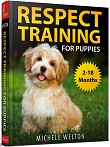 Respect Training For Puppies: 30 seconds to a calm, polite, well-behaved puppy is for puppies 2 to 18 months old. Your puppy will learn the 21 skills that all family dogs need to know. Click here to read for free.
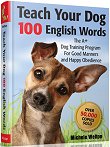 Teach Your Dog 100 English Words is a unique Vocabulary and Respect Training Program that will teach your adult dog to listen to you and do what you say. Click here to read for free.
 11 Things You Must Do Right To Keep Your Dog Healthy and Happy helps your dog live a longer, healthier life. Get my honest advice about all 11 Things before you bring home your new puppy, because some mistakes with early health care cannot be undone. Click here to read for free.
Related posts you might enjoy