
Shiloh Shepherds: What's Good About 'Em, What's Bad About 'Em
Shiloh Shepherd temperament, personality, training, behavior, pros and cons, advice, and information, by Michele Welton, Dog Trainer, Behavioral Consultant, Author of 15 Dog Books
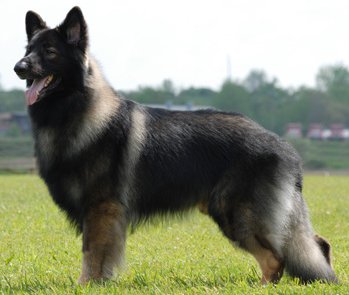
The Shiloh Shepherd was developed in the 1960s by crossing German Shepherd lines with a few other breeds.
Compared to German Shepherds, Shiloh Shepherds are larger and tend to have calmer, softer, more easygoing personalities. Also they often have longer coats that require more grooming.
Though they need long, brisk, daily walks and occasional romping to stay fit, Shiloh Shepherds are known for stamina rather than a high energy level. One breeder calls them "slow but steady."
Most Shiloh Shepherds are intelligent, trainable dogs. They enjoy swimming, carrying backpacks, and pulling carts or sleds. Some have even been used in Search & Rescue.
If you want a dog who...
- Looks like a German Shepherd, but is larger and heavier and typically has a calmer, softer personality
- Is natural-looking and athletic, but not hyperactive
- Comes in longhaired and shorthaired coats
- Is intelligent and trainable
A Shiloh Shepherd may be right for you.
If you don't want to deal with...
- Providing brisk walks every day and occasional romping (i.e. needs some space)
- Skittishness and shyness in some lines, or when not extensively socialized
- Heavy shedding, especially the shortcoat
- Legal liabilities (public perception, future breed bans, insurance problems, increased chance of lawsuits)
- Potential for serious health problems
A Shiloh Shepherd may not be right for you.
 |
Dog Breed Traits – Which Traits Are Right For You? In this brand new series, I'll help you decide which dog breed traits would best suit you and your family, your home and yard, and your lifestyle, so you can choose the best dog breed for your family. |
Keep in mind that the inheritance of temperament is less predictable than the inheritance of physical traits such as size or shedding. Temperament and behavior are also shaped by raising and training.
FREE eBooks by Michele Welton
 "Respect Training for Puppies" and "Teach Your Dog 100 English Words" are free step by step guides to teaching your pup to be calm and well-behaved.
 "11 Things You Must Do Right To Keep Your Dog Healthy and Happy" is a free guide to keeping your dog mentally, physically, and emotionally happy and healthy so you can enjoy a longer lifetime of companionship.

More traits and characteristics of the Shiloh Shepherd
If I was considering a Shiloh Shepherd, I would be most concerned about...
- Providing enough exercise and mental stimulation. Shiloh Shepherds don't need miles of running exercise but they need regular opportunities to vent their energy and do interesting things. Otherwise they will become bored, which they usually express by destructive chewing. The intelligence of these dogs is wasted when they have nothing challenging to do in their lives.
You should get your Shiloh involved in advanced obedience classes at a local dog club, and also in agility classes (obstacle course). Also your Shiloh Shepherd will love learning the games in my free online training program, Teach Your Dog 100 English Words.
- Providing enough socialization. Shiloh Shepherds need extensive exposure to friendly people so they learn to recognize the normal behaviors of "good guys." Then they can recognize the difference when someone acts abnormally. Without careful socialization, they may be excessively timid.
- Potential animal aggression. Most Shiloh Shepherds are perfectly fine with other pets in their own family, but some individuals are dominant or aggressive toward strange dogs of the same sex.
- Heavy shedding. Both short-coated Shiloh Shepherds and long-coated Shiloh Shepherds shed a lot, all year. Short coats actually drop more hair onto your floor, furniture, and clothing, compared to long coats. This is because in long-coated dogs, their shed hairs get caught in the long wavy coat and must be brushed out. A good number of Shilohs end up turned into rescue groups because of shedding, so make sure you're up for it.
- Multiple dog clubs to sort through. The original Shiloh Shepherd club is the International Shiloh Shepherd Registry (ISSR). But there are several other organizations, each of which supports its own breed standard (how the breed should look and act). Political backbiting and gossip abounds, so when you're looking for breeders, you'll need to pick your way through a minefield of claims, counterclaims, and accusations.
- Serious health problems. From hip and elbow problems, to bone diseases, to stomach disorders, to skin conditions, Shiloh Shepherds face many of the same health problems as German Shepherds. Read more about Shiloh Shepherd Health.
 About the author: Michele Welton has over 40 years of experience as a Dog Trainer, Dog Breed Consultant, and founder of three Dog Training Centers. An expert researcher and author of 15 books about dogs, she loves helping people choose, train, and care for their dogs.
My best-selling books – now available FREE on my website
 Respect Training For Puppies: 30 seconds to a calm, polite, well-behaved puppy is for puppies 2 to 18 months old. Your puppy will learn the 21 skills that all family dogs need to know. Click here to read for free.
 Teach Your Dog 100 English Words is a unique Vocabulary and Respect Training Program that will teach your adult dog to listen to you and do what you say. Click here to read for free.
 11 Things You Must Do Right To Keep Your Dog Healthy and Happy helps your dog live a longer, healthier life. Get my honest advice about all 11 Things before you bring home your new puppy, because some mistakes with early health care cannot be undone. Click here to read for free.
Related posts you might enjoy