
Shiba Inus: What's Good About 'Em, What's Bad About 'Em
Shiba Inu temperament, personality, training, behavior, pros and cons, advice, and information, by Michele Welton, Dog Trainer, Behavioral Consultant, Author of 15 Dog Books
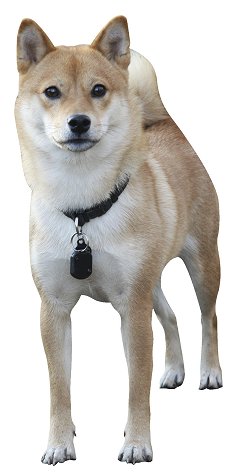
People often find themselves drawn to the Shiba Inu because he is conveniently sized, handsome and hardy, easy to groom, and clean and quiet indoors.
However.... these potential owners should explore this breed in more depth, else they might be making a big mistake.
The Shiba Inu, you see, is very challenging to raise and train.
A bold, high-spirited "big dog in a small body," he must always be kept on-leash, for he has a high prey drive and quick reflexes and will pursue anything that moves. He can outrun and outdodge any human.... and frequently does, for he has an independent spirit. Shibas are true runners.
Shiba Inu owners need secure fences. Indeed, if you plan of leaving your Shiba outdoors unsupervised, he really should have a covered run (as in chainlink all across the top) if you want to be sure of finding him in the yard where you left him. Otherwise, his ingenuity and agile jumping/climbing/digging skills may send him over or under an ordinary fence. And once he's loose, he's gone.
Dog aggression is a common breed trait. Cats are iffy around many Shibas, and small caged pets will be stalked and probably dispatched with.
You must stay one step ahead of the Shiba Inu, for he is both dominant and clever. He often tries to manipulate through intimidation and when displeased by something can emit a loud scream which may catch you (or your vet) totally unprepared.
With his marked stubborn streak and mischievous sense of humor, the Shiba Inu does best with owners who are firm, confident, and utterly consistent.
Shibas are possessive of their toys and food; it is said that if they could utter one word, it would be "Mine!"
If you want a dog who...
- Is conveniently-sized, sturdy, and strong
- Has a wolf-like (spitz) appearance, with prick ears, foxy face, thick coat, and curled tail
- Is energetic, bold, and spirited – not a lapdog
- Is smart and clever
- Moves swiftly with light-footed grace
A Shiba Inu may be right for you.
If you don't want to deal with...
- Massive destructiveness when bored or left alone too much
- Excessive suspiciousness when not socialized enough
- Aggression toward other dogs and cats – strong chasing instincts
- Containment difficulties and preventing escape attempts
- Running away, oblivious to your calls, when an interesting sight or scent catches his attention
- Strong-willed mind of his own, requiring a confident owner who can take charge
- Heavy shedding
A Shiba Inu may not be right for you.
 |
Dog Breed Traits – Which Traits Are Right For You? In this brand new series, I'll help you decide which dog breed traits would best suit you and your family, your home and yard, and your lifestyle, so you can choose the best dog breed for your family. |
Keep in mind that the inheritance of temperament is less predictable than the inheritance of physical traits such as size or shedding. Temperament and behavior are also shaped by raising and training.
FREE eBooks by Michele Welton
 "Respect Training for Puppies" and "Teach Your Dog 100 English Words" are free step by step guides to teaching your pup to be calm and well-behaved.
 "11 Things You Must Do Right To Keep Your Dog Healthy and Happy" is a free guide to keeping your dog mentally, physically, and emotionally happy and healthy so you can enjoy a longer lifetime of companionship.

- You can avoid some negative traits by choosing an ADULT dog from an animal shelter or rescue group. With an adult dog, you can easily see what you're getting, and plenty of adult Shibas have already proven themselves not to have negative characteristics.
- If you want a puppy, you can avoid some negative traits by choosing the right breeder and the right puppy.
More traits and characteristics of the Shiba Inu
If I was considering a Shiba Inu, I would be most concerned about...
- Keeping him busy enough. Shiba Inus are active go-getters who need regular opportunities to vent their energy and to use their busy minds to do interesting things. Otherwise they will become bored, which they usually express by destructive chewing. No breed should be left alone all day, but this breed is especially likely to make you aware of that fact!
- Standoffishness. Shibas need extensive exposure to people and to unusual sights and sounds, so that their natural caution doesn't become suspiciousness. Shiba Inus like to approach people on their own terms. They don't like to be grabbed at, or held tightly, so I don't recommend them around young children.
- Animal aggression. The Shiba Inu was bred to hunt other animals. Many Shiba Inus are dominant or aggressive toward other dogs of the same sex. Many have strong instincts to chase and seize small fleeing creatures. This can make for conflict if you own a cat. It may be much worse than that if you own a pet rabbit or hamster!
- Running away from you. Shiba Inus cannot be trusted off-leash. They will take off, oblivious to your frantic shouts, after anything that catches their attention or runs.
- Fence security. Many Shiba Inus are clever escape artists who will go over or under fences in search of adventure. To keep your Shiba Inu in, a 6- to 8-foot fence is recommended, and it should NOT be chain link or anything else climbable. Some Shibas can go over anything and require a covered outdoor pen. You may also need to sink wire into the ground along the fence line to thwart digging. Gates should have the highest quality locks, not a flimsy latch.
- The strong temperament. Shiba Inus are very bright but they have an independent mind of their own and little desire to please you. They can be manipulative, and many are willful and dominant (they want to be the boss) and will make you prove that you can make them do things. You must show them, through absolute consistency, that you mean what you say.
In other words, you must teach your Shiba Inu to respect you. A dog who respects you will do what you say and will stop what he's doing when you tell him "No." Follow my free online training programs.
- Heavy shedding. The Shiba Inu sheds a little throughout the year, as well as quite a bit more for three weeks during the spring and three weeks during the fall. Be sure that hair and fur on your clothing and furniture is okay with you.
 About the author: Michele Welton has over 40 years of experience as a Dog Trainer, Dog Breed Consultant, and founder of three Dog Training Centers. An expert researcher and author of 15 books about dogs, she loves helping people choose, train, and care for their dogs.
My best-selling books – now available FREE on my website
 Respect Training For Puppies: 30 seconds to a calm, polite, well-behaved puppy is for puppies 2 to 18 months old. Your puppy will learn the 21 skills that all family dogs need to know. Click here to read for free.
 Teach Your Dog 100 English Words is a unique Vocabulary and Respect Training Program that will teach your adult dog to listen to you and do what you say. Click here to read for free.
 11 Things You Must Do Right To Keep Your Dog Healthy and Happy helps your dog live a longer, healthier life. Get my honest advice about all 11 Things before you bring home your new puppy, because some mistakes with early health care cannot be undone. Click here to read for free.
Related posts you might enjoy