
Otterhounds: What's Good About 'Em, What's Bad About 'Em
Otterhound temperament, personality, training, behavior, pros and cons, advice, and information, by Michele Welton, Dog Trainer, Behavioral Consultant, Author of 15 Dog Books
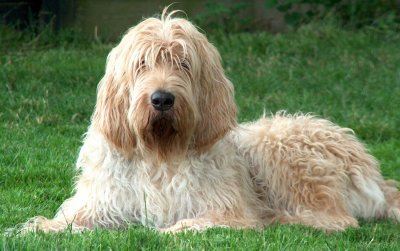
The Otterhound has been described as a "big friendly dog with a mind of his own."
Though amiable and easygoing, this rugged dog belongs in a rural area with an outdoorsy owner who can give him the exercise he loves.
Swimming is an especially appreciated form of recreation. These hunting hounds were born to dive into water, whether it be a lake or a puddle. Or he might simply submerge his shaggy head in his drinking bowl and come up shaking.
A leash or secure fence is a must at all times, for the nose of this great hunter is exquisitely sensitive, always seeking out new and exciting scents. Once he's latched on to something, his perseverance and determination (like those of his relative, the Bloodhound) are legendary.
Otterhounds tend to shamble along with a loose, shuffling gait, without lifting their big feet much off the ground.
The Otterhound's reaction to strangers varies from friendly to reserved. Most are good watchdogs but not guard dogs.
Most Otterhounds are fine with other dogs, but remember his hunting heritage – small pets are not always safe.
Obedience training takes time and effort, for he is stubborn and independent. But not usually dominant; in other words, though he'll be slow to obey, he'll be good-natured about it!
With their propensity for slobbering water, lumbering around in a rather klutzy manner, and tracking in mud with their hairy webbed feet, Otterhounds are not good choices for fastidious housekeepers or those with no sense of humor.
Also they have a loud, deep, distinctive bay that carries for amazingly long distances. Your neighbors will not appreciate it if you leave an Otterhound outside, unsupervised.
If you want a dog who...
- Is large and shaggy, a plain-looking, rustic dog
- Is enthusiastic and bumptious, and thrives on vigorous outdoor exercise
- Is amiable and easygoing
An Otterhound may be right for you.
If you don't want to deal with...
- Vigorous exercise requirements
- Rowdiness and exuberant jumping, especially when young
- Destructiveness when bored or not exercised enough
- Strong instincts to chase other animals that run
- Stubbornness
- Slowness to housebreak
- LOUD baying
- Lots of brushing (or clipping the coat short)
- "Shaggy dog syndrome," i.e. debris clinging to the coat, water soaking into the beard and dripping on your floors
- Waiting lists (very hard to find)
An Otterhound may not be right for you.
 |
Dog Breed Traits – Which Traits Are Right For You? In this brand new series, I'll help you decide which dog breed traits would best suit you and your family, your home and yard, and your lifestyle, so you can choose the best dog breed for your family. |
Keep in mind that the inheritance of temperament is less predictable than the inheritance of physical traits such as size or shedding. Temperament and behavior are also shaped by raising and training.
FREE eBooks by Michele Welton
 "Respect Training for Puppies" and "Teach Your Dog 100 English Words" are free step by step guides to teaching your pup to be calm and well-behaved.
 "11 Things You Must Do Right To Keep Your Dog Healthy and Happy" is a free guide to keeping your dog mentally, physically, and emotionally happy and healthy so you can enjoy a longer lifetime of companionship.

More traits and characteristics of the Otterhound
If I was considering an Otterhound, I would be most concerned about...
- Providing enough exercise. Without regular opportunities to vent their energy, Otterhounds become restless and bored, which they usually express by baying and destructive chewing. Otterhounds were never intended to be simply household pets. Their working behaviors (sniffing and following scents, chasing things that run, exploring, baying) can be a nuisance in a normal household setting. Trying to suppress these "hardwired" behaviors, without providing alternate outlets for their energy, is not fair to the dog.
Otterhounds should not be trusted off-leash. They will take off – oblivious to your frantic shouts – after anything that emits an odor or runs.
- Chasing instincts. Otterhounds are seldom used for hunting any more, but some individuals still have strong instincts to chase and seize fleeing creatures, including cats.
- Stubbornness. Though good-natured, Otterhounds have an independent mind of their own. You must show them, through absolute consistency, that you mean what you say. Read my free online training programs.
- Slow housebreaking. Like most scenthound breeds, Otterhounds are often a bit slow to catch on to the concept of housebreaking. Expect several months of consistent crate training.
- Noise. Otterhound should never be left outside in your yard, unsupervised. Their deep voice is extremely LOUD and carries a long way.
- Grooming and shedding. Without frequent brushing and combing, Otterhound become a matted mess. If you can't commit to the brushing, you have to commit to frequent trimming to keep the coat short and sanitary. Be aware that Otterhounds definitely shed, though some of the shed hair gets caught in the long tousled coat rather than ending up on your floor. Unless, of course, you clip the coat short; then their shed hair does end up on the floor. So when you clip, you trade less brushing for more hair on your floor.
- "Shaggy dog syndrome." Like all shaggy dogs, the Otterhound is a messy dog. Leaves, mud, snow, fecal matter, and other debris cling to his rough coat and ends up all over your house. When he drinks, his beard absorbs water, which drips on your floors when he walks away. When he eats, his beard absorbs food so that when he sniffs your face or presses his head against your leg, YOU end up dirty, too. Big shaggy dogs are not suited to fastidious housekeepers. Again, though, this can be mitigated by clipping the coat short.
- Finding one. Otterhounds don't have the traits and characteristics that most people are looking for. And they have a lot of traits that most people aren't looking for. So they're not in demand, which means very few puppies are produced each year. You'll be on a waiting list for quite some time.
 About the author: Michele Welton has over 40 years of experience as a Dog Trainer, Dog Breed Consultant, and founder of three Dog Training Centers. An expert researcher and author of 15 books about dogs, she loves helping people choose, train, and care for their dogs.
My best-selling books – now available FREE on my website
 Respect Training For Puppies: 30 seconds to a calm, polite, well-behaved puppy is for puppies 2 to 18 months old. Your puppy will learn the 21 skills that all family dogs need to know. Click here to read for free.
 Teach Your Dog 100 English Words is a unique Vocabulary and Respect Training Program that will teach your adult dog to listen to you and do what you say. Click here to read for free.
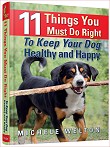 11 Things You Must Do Right To Keep Your Dog Healthy and Happy helps your dog live a longer, healthier life. Get my honest advice about all 11 Things before you bring home your new puppy, because some mistakes with early health care cannot be undone. Click here to read for free.
Related posts you might enjoy