
Leonbergers: What's Good About 'Em, What's Bad About 'Em
Leonberger temperament, personality, training, behavior, pros and cons, advice, and information, by Michele Welton, Dog Trainer, Behavioral Consultant, Author of 15 Dog Books
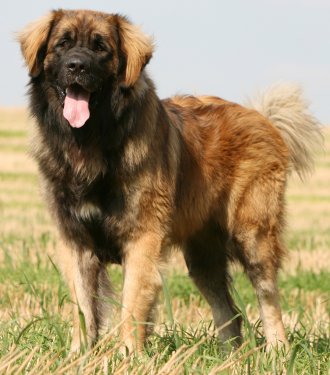
Noble and powerful, a good Leonberger is calm and steady, yet bolder and more athletic than most giant breeds.
The Leonberger enjoys swimming, tracking, agility, therapy work, pulling a cart or sled, and weight pulling – all productive outlets for his energy. Fetching a ball or Frisbee, however, is not a natural activity for this breed.
The Leonberger is a loving, steadfast dog who thrives on being made an integral part of the family. Though protective instincts develop at maturity (three to four years) and he becomes more discriminating with strangers, he should never be aggressive.
His deep, imposing bark and confident presence should be enough to deter intruders. This stability, however, assumes early and ongoing socialization and a sound-tempered bloodline. Some Leonbergers are unfortunately shy and/or sharp.
Dog aggression can be a problem, and two Leonbergers of the same sex should not be kept together.
Obedience training should start at three months old. Heeling is imperative, because these powerful dogs can literally pull you off your feet. His determination to jump up into your face and lean against your leg (leading to the affectionate nickname "Lean-on-berger") can be disconcerting.
During adolescence, his hormones will kick in and he might start to test his owner, who must respond with consistent leadership and more training. This is especially true of Leonberger males.
Leos can be messy: Their huge paws track in mud; they may drool if stressed; and most play in their water bowls, dunking their heads and coming up slobbering. It is said that their natural look is slightly damp with leaves stuck to their coats.
If you want a dog who...
- Is giant and rugged, with a thick coat
- Is more athletic than most giant breeds
- Loves outdoor activities such as hiking, swimming, and pulling a cart or sled
- Is usually polite with everyone
- Is sensibly protective, with a deep bark and confident presence
A Leonberger may be right for you.
If you don't want to deal with...
- A very large dog who wants to sit on your feet and lean his weight against your leg
- Rowdiness and exuberant jumping when young
- Destructiveness when bored or left alone too much
- Aggression or fearfulness toward strangers when not socialized enough
- Aggression toward other animals
- Strong-willed mind of his own, requiring a confident owner who can take charge
- Heavy shedding
- Slobbering
- Waiting lists (hard to find) and a high price tag
A Leonberger may not be right for you.
 |
Dog Breed Traits – Which Traits Are Right For You? In this brand new series, I'll help you decide which dog breed traits would best suit you and your family, your home and yard, and your lifestyle, so you can choose the best dog breed for your family. |
Keep in mind that the inheritance of temperament is less predictable than the inheritance of physical traits such as size or shedding. Temperament and behavior are also shaped by raising and training.
FREE eBooks by Michele Welton
 "Respect Training for Puppies" and "Teach Your Dog 100 English Words" are free step by step guides to teaching your pup to be calm and well-behaved.
 "11 Things You Must Do Right To Keep Your Dog Healthy and Happy" is a free guide to keeping your dog mentally, physically, and emotionally happy and healthy so you can enjoy a longer lifetime of companionship.

More traits and characteristics of the Leonberger
If I was considering a Leonberger, I would be most concerned about...
- Providing the proper balance of exercise. Young Leonbergers need enough exercise to keep them lean and healthy, but not so much that their soft growing bones, joints, and ligaments become over-stressed and damaged. Adult Leonbergers need more exercise to keep them in shape, but not in hot or humid weather for fear of overheating. The proper amount of exercise can be difficult to regulate in giant breeds.
Since you need to minimize their exercise, young Leonbergers can be very rambunctious. They will romp with uncoordinated gawkiness all over your house. You need to substitute extra quantities of companionship and supervision. Otherwise, left alone, young Leonbergers become bored and destructive.
- Providing something for them to do. There's really no point to getting a breed that loves doing activities....but then not pursuing any of those activities that the dog loves! You should be an outdoors lover – your Leo is. Engage his intelligent mind with activities such as backpacking, carting, sledding, weight-pulling, tracking, or a similar dog sport, to keep both his body and mind exercised.
- Providing enough socialization. Many Leonbergers have protective instincts toward strangers. They need extensive exposure to friendly people so they learn to recognize the normal behaviors of "good guys." Then they can recognize the difference when someone acts abnormally. Without careful socialization, they may be suspicious of everyone, leading to either aggression or shyness.
- The strong temperament. Leonbergers are not eager-to-please Golden Retrievers. They have a strong mind of their own and are not pushovers to raise and train. Some Leonbergers, particularly adolescent males, are willful and dominant (they want to be the boss) and will make you prove that you can make them do things. You must show them, through absolute consistency, that you mean what you say.
To teach your Leonberger to listen to you, "Respect Training" is mandatory. Follow my free online training programs.
- Animal aggression. Many Leonbergers are dominant or aggressive toward other dogs of the same sex. Some Leonbergers will chase and seize cats and other fleeing creatures.
- Slobbering. Leonbergers are not supposed to be droolers, but those with loose lips will slobber when food is present, or when stressed. And most Leonbergers are messy drinkers who slobber water everywhere. This is not a dainty dog for fastidious housekeepers.
- Heavy shedding. Leonbergers shed a lot. You'll find hair all over your clothing and furnishings.
- Health problems. An alarming number of Leonbergers are crippled by bone and joint diseases and/or succumb to cancer in middle age. Read more about Leonberger Health.
- Finding one and paying the price. In the United States, the Leonberger is hard to find and very expensive.
 About the author: Michele Welton has over 40 years of experience as a Dog Trainer, Dog Breed Consultant, and founder of three Dog Training Centers. An expert researcher and author of 15 books about dogs, she loves helping people choose, train, and care for their dogs.
My best-selling books – now available FREE on my website
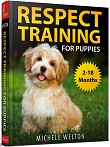 Respect Training For Puppies: 30 seconds to a calm, polite, well-behaved puppy is for puppies 2 to 18 months old. Your puppy will learn the 21 skills that all family dogs need to know. Click here to read for free.
 Teach Your Dog 100 English Words is a unique Vocabulary and Respect Training Program that will teach your adult dog to listen to you and do what you say. Click here to read for free.
 11 Things You Must Do Right To Keep Your Dog Healthy and Happy helps your dog live a longer, healthier life. Get my honest advice about all 11 Things before you bring home your new puppy, because some mistakes with early health care cannot be undone. Click here to read for free.
Related posts you might enjoy