
Jack Russell Terriers: What's Good About 'Em, What's Bad About 'Em
Jack Russell Terrier temperament, personality, training, behavior, pros and cons, advice, and information, by Michele Welton, Dog Trainer, Behavioral Consultant, Author of 15 Dog Books

If any dog can top the high energy level of a Fox Terrier, that would be a Jack Russell.
If any dog can top the hard-as-nails hunting skills of a Border Terrier, that would be a Jack Russell.
And if any dog can top the strong prey drive, determination, and intensity of a Jack Russell Terrier – well, that could only be another Jack Russell.
This bright, clever, athletic breed is on top of everything that's going on in his environment. Nothing gets by him.
A solitary or sedate lifestyle is not suited to a Jack Russell Terrier. He requires full participation in the family and vigorous daily play sessions, especially ball chasing, which he tends to be passionate about – even obsessive. Too little exercise, too little companionship, and too little mental stimulation will quickly lead to boredom, which will in turn lead to destructive behaviors. JRTs are not apartment dogs, nor are they suited to people who work a lot.
Most Jack Russell Terriers are happy-go-lucky and friendly with strangers. But in the presence of strange dogs, keep them close and under control. If the other dog minds its own manners, the Jack Russell will usually adhere to a "live and let live" philosphy. But some Jack Russells are so brash and fearless they will take on a Rottweiler if it even looks cross-eyed at them.
Two Jack Russell Terriers (regardless of sex or age) should never be left alone together. All may appear to go well for a while – even a long while. But with this breed, a seemingly amiable relationship can suddenly flare into deadly combat over something as innocuous as possession of a chew toy. If you keep two Jack Russells, it is safest to separate them when you leave the house.
As you've probably guessed by now, small pets that run, squeak, or flutter probably won't last an hour.
The exploratory and hunting instincts of Jack Russell Terriers are legendary. These dogs will "go to ground" after anything that moves and they will stay in or by the hole for hours, even days. Obviously, JRTs are enthusiastic diggers and barkers!
The Jack Russell Terrier is highly intelligent and can learn almost anything – very, very quickly. The hardest part of training a Jack Russell is convincing this cheerful but assertive little guy that he actually has to DO what he has learned, when you say so, even when he's not in the mood. Fortunately, if you are offering the correct mix of physical exercise, mental stimulation, companionship hours, and confident leadership, the Jack Russell is usually willing to oblige.
Now it is possible to find a mild-mannered, laid-back Jack Russell. When you're looking for an adult dog from a rescue group, they might have a purebred or mixed Jack Russell who is more mellow. But this temperament is not the norm for the breed, so if you get a puppy, he or she is likely to grow up to have the active go-getter temperament I've been describing.
If you want a dog who...
- Is small, sturdy, and natural-looking
- Is one of the most energetic, most determined, and most intense of all breeds
- Is extremely alert and makes a keen watchdog, yet is still sociable with strangers
- When handled properly, is the brightest and most trainable of all the terriers, loves learning tricks, and EXCELS in competitive activities such as agility and flyball
A Parson Jack Russell Terrier may be right for you.
If you don't want to deal with...
- The dynamic terrier temperament (see full description below)
- Providing plenty of exercise and interesting things to do
- Rowdiness and destructiveness when NOT given enough exercise or interesting things to do!
- Very strong chasing instincts
- Digging holes
- Barking
- Constant shedding (lots of white hairs everywhere)
- Mouthiness – chewing on things, carrying things around, mouthing your hands in play
- Potential aggression toward other animals
A Parson Jack Russell Terrier may not be right for you.
 |
Dog Breed Traits – Which Traits Are Right For You? In this brand new series, I'll help you decide which dog breed traits would best suit you and your family, your home and yard, and your lifestyle, so you can choose the best dog breed for your family. |
Keep in mind that the inheritance of temperament is less predictable than the inheritance of physical traits such as size or shedding. Temperament and behavior are also shaped by raising and training.
FREE eBooks by Michele Welton
 "Respect Training for Puppies" and "Teach Your Dog 100 English Words" are free step by step guides to teaching your pup to be calm and well-behaved.
 "11 Things You Must Do Right To Keep Your Dog Healthy and Happy" is a free guide to keeping your dog mentally, physically, and emotionally happy and healthy so you can enjoy a longer lifetime of companionship.

- You can avoid some negative traits by choosing an ADULT dog from an animal shelter or rescue group. With an adult dog, you can easily see what you're getting, and plenty of adult Jack Russells have already proven themselves not to have negative characteristics.
- If you want a puppy, you can avoid some negative traits by choosing the right breeder and the right puppy.
More traits and characteristics of Jack Russell Terriers
If I was considering a Jack Russell Terrier, I would be most concerned about...
- The dynamic terrier temperament. Most terrier breeds are remarkably similar. The same words are used over and over – quick to bark, quick to chase, lively, bossy, feisty, scrappy, clever, independent, stubborn, persistent, impulsive, intense.
- Providing enough exercise and mental stimulation. Jack Russell Terriers need regular opportunities to vent their energy and do interesting things. These dogs are so smart that I hate to see them in homes where they're expected to just hang around the house and yard. Jack Russells were never intended to be simply household pets. Trying to suppress their drives to hunt and explore, without providing alternate outlets for their energy, results in a frustrated and bored Jack Russell – and frustrated, bored Jack Russells can "act out" in ways that you won't like.
Jack Russell Terriers thrive when you find interesting things for them to do that challenge their minds, such as agility training (obstacle course), advanced obedience training, flyball, or "earthdog" training (where terriers dig and tunnel after small critters who are secured in a sturdy cage so they can't be harmed). See my free online training program, Teach Your Dog 100 English Words, which will keep your Jack Russell on his toes!
- Potential animal aggression. Many Jack Russell Terriers are dominant or aggressive toward other dogs. Two Jack Russells should not be left alone together – one may kill the other over possession of a toy. Most Jack Russells also have strong instincts to chase and seize small fleeing creatures.
- Fence security. Many Jack Russell Terriers are clever escape artists who will go over or under fences in search of adventure. You may need higher fences than you might imagine for their small size. They can climb chain link. You may also need to sink wire into the ground along the fence line to thwart digging. Gates should have the highest quality locks, as some of these dogs can open flimsy latches.
- Constant shedding (shorthaired coat). Yes, constant. The shorthaired Jack Russell Terrier sheds year-round. You'll find little white hairs all over your clothing and furnishings. Some owners actually get rid of their Jack Russell just because of the shedding. The rough (wiry-type) coat also sheds, but its dead hairs are often trapped in the wiry coat rather than falling on the floor. But the rough coat requires more grooming.
- Mind of their own. Though much more amenable to training than other terriers, Jack Russells must be taught at an early age that they are not the rulers of the world. The toughness that makes them suited to killing vermin can frustrate you when you try to teach them anything. Many Jack Russell Terriers love learning tricks, but less so the "No" command. Some Jack Russells are stubborn and bossy and you must show them, through absolute consistency, that you mean what you say. Follow my free online training program, Respect Training for Puppies.
- Barking. All terrier breeds tend to be quick to sound the alarm at every new sight and sound. You have to be equally quick to stop them.
- Health problems. Jack Russell Terriers can suffer from serious eye diseases such as lens luxation and cataracts, joint diseases such as luxating patella, heart disease, epilepsy, and more. Read more about Jack Russell Terrier Health.
 About the author: Michele Welton has over 40 years of experience as a Dog Trainer, Dog Breed Consultant, and founder of three Dog Training Centers. An expert researcher and author of 15 books about dogs, she loves helping people choose, train, and care for their dogs.
My best-selling books – now available FREE on my website
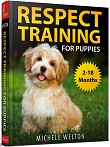 Respect Training For Puppies: 30 seconds to a calm, polite, well-behaved puppy is for puppies 2 to 18 months old. Your puppy will learn the 21 skills that all family dogs need to know. Click here to read for free.
 Teach Your Dog 100 English Words is a unique Vocabulary and Respect Training Program that will teach your adult dog to listen to you and do what you say. Click here to read for free.
 11 Things You Must Do Right To Keep Your Dog Healthy and Happy helps your dog live a longer, healthier life. Get my honest advice about all 11 Things before you bring home your new puppy, because some mistakes with early health care cannot be undone. Click here to read for free.
Related posts you might enjoy