
Havanese: What's Good About 'Em, What's Bad About 'Em
Havanese temperament, personality, training, behavior, pros and cons, advice, and information, by Michele Welton, Dog Trainer, Behavioral Consultant, Author of 15 Dog Books
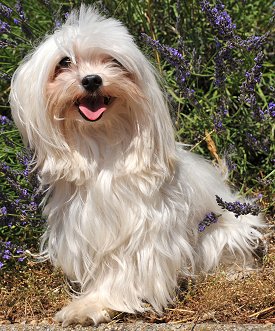
One of the brightest and sturdiest of the toys, the Havanese is happy and playful and enjoys clever games of dexterity such as "pull the hidden toy from under the cabinet with your paw."
Havanese are very people-oriented dogs, love snuggling in laps, and can be overly dependent – they don't do well at all when left for long periods of time without companionship. "Not doing well" means unhappiness and boredom, which they may try to vent through barking and destructive chewing.
Though peaceful and gentle with everyone (humans and other pets), the Havanese can be conservative with strangers. Socialization is important to build a confident, outgoing temperament, as there is a potential for excessive caution/timidity.
Havanese do have an independent streak, but they are not a dominant breed. They respond well to training that includes food rewards and they especially love learning tricks. Many individuals excel in competitive obedience and agility.
The most problematic training issue is housebreaking – Havanese are slow to housetrain. Barking needs to be curtailed, as well. Many Havanese like to perch on the high back of a sofa or chair, looking out the window so they can announce visitors.
If you want a dog who...
- Is small but sturdier than his tiny Maltese cousin
- Doesn't need much outdoor exercise (just daily walks, plus romps in a fenced yard
- Is playful and entertaining
- Makes a good watchdog, but is not aggressive
- Has a long coat (which can be clipped short for easy maintenance)
- Doesn't shed much (one of the best breeds for allergy sufferers)
- Is good with other pets
A Havanese may be right for you.
If you don't want to deal with...
- "Separation anxiety" (destructiveness and barking) when left alone too much
- Shyness in some lines, or when not socialized enough
- Frequent brushing and combing (unless regularly clipped short)
- Mild stubbornness
- Housebreaking difficulties
- Barking
A Havanese may not be right for you.
 |
Dog Breed Traits – Which Traits Are Right For You? In this brand new series, I'll help you decide which dog breed traits would best suit you and your family, your home and yard, and your lifestyle, so you can choose the best dog breed for your family. |
Keep in mind that the inheritance of temperament is less predictable than the inheritance of physical traits such as size or shedding. Temperament and behavior are also shaped by raising and training.
FREE eBooks by Michele Welton
 "Respect Training for Puppies" and "Teach Your Dog 100 English Words" are free step by step guides to teaching your pup to be calm and well-behaved.
 "11 Things You Must Do Right To Keep Your Dog Healthy and Happy" is a free guide to keeping your dog mentally, physically, and emotionally happy and healthy so you can enjoy a longer lifetime of companionship.

- You can avoid some negative traits by choosing an ADULT dog from an animal shelter or rescue group. With an adult dog, you can easily see what you're getting, and plenty of adult Havanese have already proven themselves not to have negative characteristics.
- If you want a puppy, you can avoid some negative traits by choosing the right breeder and the right puppy.
More traits and characteristics of the Havanese
If I was considering a Havanese, I would be most concerned about...
 Grooming. Coat care is a major responsibility. Havanese require weekly brushing and combing, and also clipping and trimming every couple of months. Otherwise their coat keeps growing and turns into a matted mass.
For ease of care, consider clipping the coat short so that brushing and combing is minimized. Then your Havanese will look like an adorable puppy throughout his life.
- Housebreaking problems. The Havanese belongs to the same "family" of dogs as the Bichon Frise and Maltese and all of them are slow to housebreak. Consistent crate training is mandatory. Sometimes a doggy door is necessary so the dog can go out whenever he needs to (though that can lead to another problem if he stays outside and barks!). You will have greater success if the potty area is covered, since many Havanese despise getting wet. Read more on housebreaking.
If the potential housebreaking problem sounds like a deal-breaker to you, don't give up! Consider adopting an already-housebroken adult Havanese from a rescue group.
- Potential separation anxiety. More than most other breeds, the Havanese needs a great deal of companionship and does not like being left alone for more than a few hours. He is likely to express unhappiness by barking or chewing things up.
- Providing enough socialization. The Havanese tends to be a bit standoffish with strangers. If you don't do enough socializing, or if you do it the wrong way, their natural caution might become shyness or suspiciousness. Read more on socializing.
- Potential barking. Like most small dogs, the Havanese may be quick to bark when he hears or sees something new. But you can prevent your Havanese from developing a chronic barking habit by establishing the right relationship between the two of you, where you are the leader and he is the follower. When your Havanese respects you, he will follow your rules and stop what he's doing when you tell him "No." Follow my free online training programs.
- Potential health problems. Most Havanese are long-lived. But they are very prone to allergies that can disrupt their quality of life. Havanese can be allergic to fleas, grass, pollen, and so on. Allergies cause a dog to scratch and chew himself into horrendous skin conditions.
Other concerns in the breed are urinary problems and bladder stones, along with loose knee joints that may require surgery. Read more about Havanese Health.
 About the author: Michele Welton has over 40 years of experience as a Dog Trainer, Dog Breed Consultant, and founder of three Dog Training Centers. An expert researcher and author of 15 books about dogs, she loves helping people choose, train, and care for their dogs.
My best-selling books – now available FREE on my website
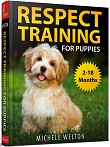 Respect Training For Puppies: 30 seconds to a calm, polite, well-behaved puppy is for puppies 2 to 18 months old. Your puppy will learn the 21 skills that all family dogs need to know. Click here to read for free.
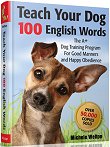 Teach Your Dog 100 English Words is a unique Vocabulary and Respect Training Program that will teach your adult dog to listen to you and do what you say. Click here to read for free.
 11 Things You Must Do Right To Keep Your Dog Healthy and Happy helps your dog live a longer, healthier life. Get my honest advice about all 11 Things before you bring home your new puppy, because some mistakes with early health care cannot be undone. Click here to read for free.
Related posts you might enjoy