
Golden Retrievers: What's Good About 'Em, What's Bad About 'Em
Golden Retriever temperament, personality, training, behavior, pros and cons, advice, and information, by Michele Welton, Dog Trainer, Behavioral Consultant, Author of 15 Dog Books

The Golden Retriever's kindly expression says it all. This is one of the finest family dogs in the world: cheerful, demonstrative, trustworthy with everyone, and forgiving of any mistakes made by inexperienced owners.
Give this breed two brisk walks each day, play fetch games, and take him out for a good run once a week, and he is adaptable to almost any lifestyle.
Friendly with everyone (strangers, children, dogs, cats, smaller pets), his bark is welcoming rather than protective.
You must control his tendency to chew on objects and to mouth your hands – provide a box filled with toys so he can carry things around in his mouth.
A Golden Retriever remains enthusiastically puppy-like for many years, so early obedience training is required to instill calmness and good manners.
Eager to please and wonderfully responsive, he is nonetheless distracted by exciting sights and sounds, so you must be both patient and persistent.
The mind and heart of a Golden is sweet and gentle, but his body is robust – until he's taught not to pull on the leash, you'll need good biceps to walk him.
If you want a dog who...
- Is large, athletic, and natural-looking
- Has a pretty feathered coat
- Has a cheerful, tail-wagging nature
- Is steady-tempered and dependable with everyone
- Is peaceful with other animals
- Is eager to please and very responsive to training
A Golden Retriever may be right for you.
If you don't want to deal with...
- Providing a goodly amount of exercise
- Exuberant jumping, especially when young
- Mouthiness – chewing on things, carrying things around
- Regular brushing and combing to avoid mats and tangles
- Heavy shedding
- A distinctive doggy odor
- Concerns about a multitude of serious health problems
A Golden Retriever may not be right for you.
 |
Dog Breed Traits – Which Traits Are Right For You? In this brand new series, I'll help you decide which dog breed traits would best suit you and your family, your home and yard, and your lifestyle, so you can choose the best dog breed for your family. |
Keep in mind that the inheritance of temperament is less predictable than the inheritance of physical traits such as size or shedding. Temperament and behavior are also shaped by raising and training.
FREE eBooks by Michele Welton
 "Respect Training for Puppies" and "Teach Your Dog 100 English Words" are free step by step guides to teaching your pup to be calm and well-behaved.
 "11 Things You Must Do Right To Keep Your Dog Healthy and Happy" is a free guide to keeping your dog mentally, physically, and emotionally happy and healthy so you can enjoy a longer lifetime of companionship.

- You can avoid some negative traits by choosing an ADULT dog from an animal shelter or rescue group. With an adult dog, you can easily see what you're getting, and plenty of adult Golden Retrievers have already proven themselves not to have negative characteristics.
- If you want a puppy, you can avoid some negative traits by choosing the right breeder and the right puppy.
More traits and characteristics of Golden Retrievers
If I was considering a Golden Retriever, I would be most concerned about...
- High energy when young. Young Golden Retrievers (up to two or three years old) romp and jump with vigor. They don't mean any harm but things can go flying – including people who are not steady on their feet. If you have toddlers, or if you or anyone who lives with you is infirm, consider adopting an adult Golden Retriever from a rescue group. Adults have a wonderfully settled temperament and you can specifically look for a calm one.
- Providing enough exercise and mental stimulation. Golden Retrievers were developed to be hunting dogs, which mean they are athletic and smart dogs. They need regular opportunities to vent their energy and do interesting things. You can't just let them in and out of the back yard and think that qualifies! They will become bored – which they may express by becoming rambunctious and destructive.
You can control your Golden Retriever's bounciness AND keep him mentally stimulated by enrolling him in ongoing agility classes (an obstacle course for dogs). Also follow the training program in my free online book Teach Your Dog 100 English Words, which includes lots of fun exercises for your Golden.
- Shedding and doggy odor. Golden Retrievers are heavy shedders – you need to be okay with this reality. You'll find a lot of hair on your clothing and furniture. Golden Retrievers also have a noticeable doggy odor and produce a lot of dander. Not the breed for anyone with any type of allergies!
- Grooming. Some Golden Retrievers have a medium-length coat that's not difficult to groom, while others have a heavier coat with lots of feathering. These latter dogs need regular grooming to comb out tangles before they become painful mats. Goldens also need occasional clippering and scissoring, especially around their "bathroom parts" in order for those to remain sanitary.
- Serious health problems. Unfortunately, the Golden Retriever has lots and lots of potential health problems. Many Goldens do live to 12 or 13 years old, but they're not necessarily healthy during those years; chronic health issues can really take their toll. Many other Goldens are lost at age 6 or 7 or 8, to crippling joint and bone diseases, heart disease, epilepsy, or cancer. Golden Retrievers should not be fed a kibble diet, as this can cause (or worsen) skin disorders and allergies, which are all too common. I recommend feeding a heavily meat-based diet with absolutely no grains. Read more about Golden Retriever Health.
 About the author: Michele Welton has over 40 years of experience as a Dog Trainer, Dog Breed Consultant, and founder of three Dog Training Centers. An expert researcher and author of 15 books about dogs, she loves helping people choose, train, and care for their dogs.
My best-selling books – now available FREE on my website
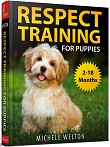 Respect Training For Puppies: 30 seconds to a calm, polite, well-behaved puppy is for puppies 2 to 18 months old. Your puppy will learn the 21 skills that all family dogs need to know. Click here to read for free.
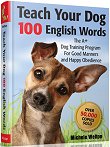 Teach Your Dog 100 English Words is a unique Vocabulary and Respect Training Program that will teach your adult dog to listen to you and do what you say. Click here to read for free.
 11 Things You Must Do Right To Keep Your Dog Healthy and Happy helps your dog live a longer, healthier life. Get my honest advice about all 11 Things before you bring home your new puppy, because some mistakes with early health care cannot be undone. Click here to read for free.
Related posts you might enjoy