
German Wirehaired Pointers: What's Good About 'Em, What's Bad About 'Em
German Wirehaired Pointer temperament, personality, training, behavior, pros and cons, advice, and information, by Michele Welton, Dog Trainer, Behavioral Consultant, Author of 15 Dog Books
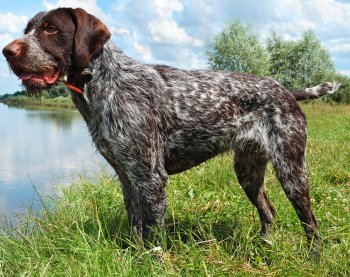
The AKC Standard says, "An intelligent, energetic, and determined hunter."
"Hunter" is a key word there. The German Wirehaired Pointer is steady and sensible, but also rugged and busy. He has a high energy level and belongs with an equally athletic owner who will take him running, biking, and hiking and preferably work him in the field.
Too much confinement and too little attention can lead to barking, hyperactivity, and destructive chewing.
Though some German Wirehaired Pointers are outgoing and friendly, most are rather aloof with strangers and can be protective (though not usually aggressive). With people, that is! With strange dogs, the German Wirehaired Pointer CAN be aggressive (or at least dominant and bold), and with his strong hunting instincts, some individuals are sharp with cats.
This breed is strong-willed and determined and needs an owner who knows how to lead. Usually he is more serious and discriminating than his German Shorthair cousin, though many do have a clownish side.
German Wirehaired Pointers are not for the fastidious household: They are sloppy drinkers, their beard soaking up water and depositing it as a trail of drips across your floor.
If you want a dog who...
- Is large, tautly-muscled, and athletic
- Has a wiry coat and whiskery beard
- Thrives on vigorous exercise
- Is often more serious and discriminating toward strangers than his German Shorthair cousin
- Makes a keen watchdog
A German Wirehaired Pointer may be right for you.
If you don't want to deal with...
- Vigorous exercise requirements
- Rowdiness and exuberant jumping, especially when young or not exercised enough
- Destructiveness and barking when left alone too much or not exercised enough
- Potential for aggression toward other animals
- Strong-willed mind of his own, requiring a confident owner who can take charge
A German Wirehaired Pointer may not be right for you.
 |
Dog Breed Traits – Which Traits Are Right For You? In this brand new series, I'll help you decide which dog breed traits would best suit you and your family, your home and yard, and your lifestyle, so you can choose the best dog breed for your family. |
Keep in mind that the inheritance of temperament is less predictable than the inheritance of physical traits such as size or shedding. Temperament and behavior are also shaped by raising and training.
FREE eBooks by Michele Welton
 "Respect Training for Puppies" and "Teach Your Dog 100 English Words" are free step by step guides to teaching your pup to be calm and well-behaved.
 "11 Things You Must Do Right To Keep Your Dog Healthy and Happy" is a free guide to keeping your dog mentally, physically, and emotionally happy and healthy so you can enjoy a longer lifetime of companionship.

- You can avoid some negative traits by choosing an ADULT dog from an animal shelter or rescue group. With an adult dog, you can easily see what you're getting, and plenty of adult German Wirehairs have already proven themselves not to have negative characteristics.
- If you want a puppy, you can avoid some negative traits by choosing the right breeder and the right puppy.
More traits and characteristics of the German Wirehaired Pointer
If I was considering a German Wirehaired Pointer, I would be most concerned about...
- Providing enough exercise. German Wirehaired Pointers are athletic dogs who need regular opportunities to vent their energy and gallop. Otherwise they will become rambunctious and bored, which dogs usually express by barking and destructive chewing. This is not a breed who will hang happily around the house and yard doing nothing.
You should be an active outdoors lover interested in hunting or hiking, or taking your dog running with you. However, running is risky exercise for dogs unless it is done after the dog's bones and joints are fully mature, and only on a soft surface like dirt. Dogs should not be run on pavement, and young dogs should not be run at all.
- Bounciness. Young German Wirehaired Pointers (up to about two years old) romp and jump with great vigor, and things can go flying, including small children and infirm people.
- Potential dog-on-dog aggression. Many German Wirehaired Pointers are fine with other dogs, but other individuals are dominant/bossy toward other dogs of the same sex.
- Potential cat aggression. A good number of German Wirehairs have strong instincts to go after cats and other fleeing creatures, often with deadly intent.
- The strong temperament. German Wirehaired Pointers tend to be smart but willful dogs who require an experienced owner and trainer. They are also easily distracted by exciting sights, sounds, and scents, so it can be a chore to keep this breed's attention. Read my free online training programs.
 About the author: Michele Welton has over 40 years of experience as a Dog Trainer, Dog Breed Consultant, and founder of three Dog Training Centers. An expert researcher and author of 15 books about dogs, she loves helping people choose, train, and care for their dogs.
My best-selling books – now available FREE on my website
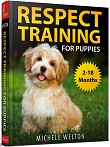 Respect Training For Puppies: 30 seconds to a calm, polite, well-behaved puppy is for puppies 2 to 18 months old. Your puppy will learn the 21 skills that all family dogs need to know. Click here to read for free.
 Teach Your Dog 100 English Words is a unique Vocabulary and Respect Training Program that will teach your adult dog to listen to you and do what you say. Click here to read for free.
 11 Things You Must Do Right To Keep Your Dog Healthy and Happy helps your dog live a longer, healthier life. Get my honest advice about all 11 Things before you bring home your new puppy, because some mistakes with early health care cannot be undone. Click here to read for free.
Related posts you might enjoy