
Italian Greyhound Health Care & Feeding
By Michele Welton, Dog Trainer, Breed Selection Consultant, Author of 15 Dog Books
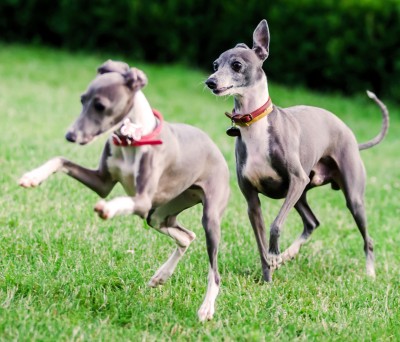
Start your Italian Greyhound off on the right foot by feeding the right food, giving the right vaccinations, finding the right vet, and if you're going to spay or neuter, don't do it too early.
Jump down to this list of
Italian Greyhound Health Problems
Or check out my advice for raising a healthy Italian Greyhound puppy or adult dog:
 Dog Health Care – The Sensible Way
Read my advice on daily health care so your Italian Greyhound lives a long, healthy life and seldom needs to see the vet... [read more]
 3 Best Ways To Feed Your Dog Healthy Food
You can dramatically increase your dog's chances of living a long, healthy life by feeding the right food. Cutting right to the chase, the best foods for your Italian Greyhound are... [read more]
 A Quick Way To Make Homemade Dog Food
Your Italian Greyhound will love real chicken, turkey, beef, fish, eggs, yogurt, broccoli.... this is not just "people food" and I'll tell you why... [read more]
 5 Best Kibble and Canned Dog Foods
Some are better than others, but I must be honest – I'm not a huge fan of dry or canned dog food. Here are my concerns... [read more]
 Vaccinations and Booster Shots: Needed or Not?
How many vaccinations does your Italian Greyhound puppy really need? Does your adult dog need yearly booster shots? The vaccination guidelines have changed! Find out what some vets aren't telling you... [read more]
 Spaying Your Female Dog: Pros and Cons
Should your female Italian Greyhound be spayed? Current research says, "The AGE at which you spay can be vitally important to your dog's future health." So what's the best age? [read more]
 Neutering Your Male Dog: Pros and Cons
Have you been told that you must neuter your male Italian Greyhound? Current research shows that the issue is not so simple. Pet owners are not being told about some risks associated with neutering male dogs, especially neutering too early... [read more]
 Make Sure Your Vet is the Best!
Is your current veterinarian really the best choice for your dog? Here's how to tell... [read more]
 Assisi Loop Review
Does your Italian Greyhound suffer from arthritis, hip dysplasia, disk disease, colitis? My honest review of a veterinary device you can use at home to reduce inflammation and pain. [read more]
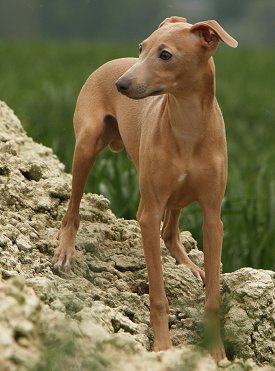
Complete list of Italian Greyhound health problems
Dental disease in Italian Greyhounds
The Italian Greyhound Club conducted a health survey that included 2274 dogs.
Finally survey found that the average lifespan of this breed is 9 years – surprisingly low for a small dog. Since many IGs do live well beyond age 9, that means many others must be dying younger than 9 – mostly from accidents.
The survey also reported that the most common health problem in Italian Greyhounds is dental disease.
Italian Greyhounds have very large teeth that don't fit well into their narrow jaws. To make matters worse, entire lines of Italian Greyhounds tend to inherit soft, pointy, yellowish teeth that are prone to "going bad" at an early age.
This hereditary disease is called enamel hypoplasia (lack of enamel).
Dental disease is a serious health issue in Italian Greyhounds, as it can so easily lead to abscesses and infections.
Eye diseases in Italian Greyhounds
The most serious eye diseases in Italian Greyhounds are cataracts (appearing before 3 years old and often progressing to blindness), glaucoma (which can lead to blindness), and progressive retinal atrophy (PRA) (appearing at 3-4 years old and always progressing to blindness).
An eye disease called vitreous degeneration is also common in Italian Greyhounds.
The vitreous is a clear jelly-like material within the eye that provides shape to the eye. If the vitreous develops an inflammation, it may become cloudy or liquefied, and vision may be impaired or lost. Vitreous degeneration may predispose a dog to other eye diseases (retinal dysplasia, lens luxation, or glaucoma).
Epilepsy in Italian Greyhounds
Epilepsy is a serious concern in the breed, with up to 15% of the breed affected.
Skin diseases in Italian Greyhounds
A skin disease called color dilution alopecia is common in blue (gray) Italian Greyhounds. It causes patchy hair loss resulting in a moth-eaten look, along with chronic skin infections that require medicated baths.
Demodectic mange is regularly seen in Italian Greyhound puppies and adolescents.
Chronic allergies cause itchy skin and often lead to bacterial skin infections (pyoderma).
Some Italian Greyhounds have pattern baldness, a gradual thinning of hair around their temples and ears and under their neck and stomach. It's not itchy and the skin and coat are otherwise normal.
Since it's a cosmetic condition, there's no treatment required other than adding supplements that are good for the skin and coat, such as fatty acids. Better yet, switch your Italian Greyhound to a real-food diet, which will provide all those essential fatty acids.
Orthopedic diseases in Italian Greyhounds
The most typical joint problem in Italian Greyhounds is luxating patella (loose knees), which can cause pain and lameness.
But the joint problem to worry about the most is Legg-Calve-Perthes disease, which affects the hips and can be very serious.
Hip and elbow dysplasia are rare in this breed.
Adult Italian Greyhounds are not as fragile as they look, but musculoskeletal injuries (fractures, pulled muscles or ligaments, broken toes, paw injuries, etc.) are common when slender sighthounds race about.
The long slender legs of puppies and adolescents are frequently fractured due to their reckless leaping. Some families of IGs inherit bones that are especially brittle and prone to breakage.
A health survey of over 700 Italian Greyhounds revealed that 15% have broken a leg.
Miscellaneous health problems
- heart disease (especially persistent right aortic arch)
- blood-clotting disease (von Willebrand's)
- inherited deafness
- hypothyroidism
- liver shunt
Italian Greyhounds are prone to harmless episodes of reverse sneezing.
Common sighthound issues
Because of their low body fat, all sighthounds are extra sensitive to anesthetics and require an experienced vet who will follow a special Sighthound Anesthesia Protocol.
Sighthounds REQUIRE open space to run. A sighthound who can't stretch his legs and gallop off-leash will not develop proper muscle tone for good health.
BUT these dogs are instinctive chasers. If they see something moving in the distance, they take off. You should never let these dogs off-leash at the park!
Preventing health problems
Some health problems are inherited. For example, if your dog inherits from his parents the genes for an eye disease called PRA, he will go blind and there's nothing anyone can do about it.
 But most health problems can be prevented by the ways you raise your dog.
FREE eBOOK! My free online health care program, 11 Things You Must Do Right To Keep Your Dog Healthy and Happy shows you how to raise your Italian Greyhound in all the right ways that help prevent health problems. Become your dog's health care champion!
 About the author: Michele Welton has over 40 years of experience as a Dog Trainer, Dog Breed Consultant, and founder of three Dog Training Centers. An expert researcher and author of 15 books about dogs, she loves helping people choose, train, and care for their dogs.
My best-selling books – now available FREE on my website
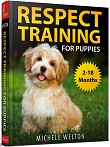 Respect Training For Puppies: 30 seconds to a calm, polite, well-behaved puppy is for puppies 2 to 18 months old. Your puppy will learn the 21 skills that all family dogs need to know. Click here to read for free.
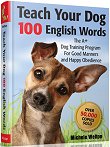 Teach Your Dog 100 English Words is a unique Vocabulary and Respect Training Program that will teach your adult dog to listen to you and do what you say. Click here to read for free.11 Things You Must Do Right To Keep Your Dog Healthy and Happy helps your dog live a longer, healthier life. Get my honest advice about all 11 Things before you bring home your new puppy, because some mistakes with early health care cannot be undone. Click here to read for free.