

Beagle Health Care & Feeding
By Michele Welton, Dog Trainer, Breed Selection Consultant, Author of 15 Dog Books

Start your Beagle off on the right foot by feeding the right food, giving the right vaccinations, finding the right vet, and if you're going to spay or neuter, don't do it too early.
Jump down to this list of
Beagle Health Problems
Or check out my advice for raising a healthy Beagle puppy or adult dog:
 Dog Health Care – The Sensible Way
Read my advice on daily health care so your Beagle lives a long, healthy life and seldom needs to see the vet... [read more]
 3 Best Ways To Feed Your Dog Healthy Food
You can dramatically increase your dog's chances of living a long, healthy life by feeding the right food. Cutting right to the chase, the best foods for your Beagle are... [read more]
 A Quick Way To Make Homemade Dog Food
Your Beagle will love real chicken, turkey, beef, fish, eggs, yogurt, broccoli.... this is not just "people food" and I'll tell you why... [read more]
 5 Best Kibble and Canned Dog Foods
Some are better than others, but I must be honest – I'm not a huge fan of dry or canned dog food. Here are my concerns... [read more]
 Vaccinations and Booster Shots: Needed or Not?
How many vaccinations does your Beagle puppy really need? Does your adult dog need yearly booster shots? The vaccination guidelines have changed! Find out what some vets aren't telling you... [read more]
 Spaying Your Female Dog: Pros and Cons
Should your female Beagle be spayed? Current research says, "The AGE at which you spay can be vitally important to your dog's future health." So what's the best age? [read more]
 Neutering Your Male Dog: Pros and Cons
Have you been told that you must neuter your male Beagle? Current research shows that the issue is not so simple. Pet owners are not being told about some risks associated with neutering male dogs, especially neutering too early... [read more]
 Make Sure Your Vet is the Best!
Is your current veterinarian really the best choice for your dog? Here's how to tell... [read more]
 Assisi Loop Review
Does your Beagle suffer from arthritis, hip dysplasia, disk disease, colitis? My honest review of a veterinary device you can use at home to reduce inflammation and pain. [read more]

Complete list of Beagle health problems
Ears and skin are notoriously problematic in Beagles.
- The folded-over ears with their narrow ear canals are extremely prone to chronic ear infections and hematoma.
- Beagles are prone to allergies that lead to itchy skin and bacterial skin infections (pyoderma).
- The skin disease seborrhea is common.
- Skin growths are common – non-tumorous growths (cysts, lipomas) and tumors (sebaceous tumors, mast cell tumors, perianal gland adenoma).
- Demodectic mange occurs in Beagles, especially Beagle puppies.
Beagles are susceptible to just about every eye disease there is. Glaucoma and cherry eye are especially common. Also retinal dysplasia, progressive retinal atrophy (PRA), corneal dystrophy, cataracts, dry eye, eyelash abnormalities, eyelid abnormalities (entropion and ectropion), lens luxation, and persistent pupillary membranes.
Intervertebral disk disease is very common in Beagles, especially in individuals with a deformed chondrodysplastic build (shortish legs, longish back). Intervertebral disk disease can be confused with two other diseases that can occur in Beagles: Wobbler's syndrome and an inflammatory brain disease called aseptic meningitis/vasculitis.
For such a small dog, the hip dysplasia rate is extremely high. The Orthopedic Foundation of America evaluated the hip X-rays of 1000 Beagles and found 18% dysplastic. That's just awful.
Yet another orthopedic health problem in Beagles is luxating patella (loose knee joints).
Seizures in Beagles (epilepsy) are a serious concern in the breed.
Heart disease is increasing, especially pulmonic stenosis and occasionally cardiomyopathy, septal defect, mitral valve disease, and other heart defects.
The urinary system is another target for health problems in Beagles, including kidney disease, urinary stones, and cancer of the bladder (transitional cell carcinoma).
According to the Michigan State University Thyroid Database, Beagles have the 10th highest rate of hypothyroidism of 140 breeds (up to 22% affected).
Blood-clotting diseases (von Willebrand's disease, hemophilia A, and Factor VII deficiency) are found with some regularity.
A Beagle puppy with a lot of white on his head may suffer from inherited deafness.
Other health issues occasionally reported in Beagles include immunoglobulin deficiencies, megaesophagus, lupus, pemphigus, liver shunt, lysosomal storage disease, white shaker dog syndrome, narcolepsy, hernias, autoimmune hemolytic anemia, and pyruvate kinase deficiency.
To end this depressing list of Beagle health problems on a more cheerful note, Beagles are prone to reverse sneezing – which is harmless.
Preventing health problems
Some health problems are inherited. For example, if your dog inherits from his parents the genes for an eye disease called PRA, he will go blind and there's nothing anyone can do about it.
 But most health problems can be prevented by the ways you raise your dog.
FREE eBOOK! My free online health care program, 11 Things You Must Do Right To Keep Your Dog Healthy and Happy shows you how to raise your Beagle in all the right ways that help prevent health problems. Become your dog's health care champion!
 About the author: Michele Welton has over 40 years of experience as a Dog Trainer, Dog Breed Consultant, and founder of three Dog Training Centers. An expert researcher and author of 15 books about dogs, she loves helping people choose, train, and care for their dogs.
My best-selling books – now available FREE on my website
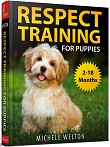 Respect Training For Puppies: 30 seconds to a calm, polite, well-behaved puppy is for puppies 2 to 18 months old. Your puppy will learn the 21 skills that all family dogs need to know. Click here to read for free.
 Teach Your Dog 100 English Words is a unique Vocabulary and Respect Training Program that will teach your adult dog to listen to you and do what you say. Click here to read for free.11 Things You Must Do Right To Keep Your Dog Healthy and Happy helps your dog live a longer, healthier life. Get my honest advice about all 11 Things before you bring home your new puppy, because some mistakes with early health care cannot be undone. Click here to read for free.