

The Truth About Purebred Dogs
By Michele Welton, Dog Trainer, Breed Selection Consultant, Author of 15 Dog Books
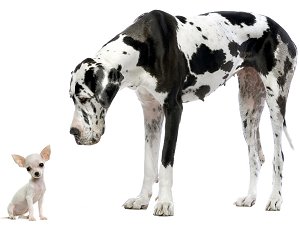
Should you get a purebred dog? Before you decide, there are some negatives about purebred dogs that you should know.
You might be absolutely convinced that you want a purebred dog. And on a website called yourpurebredpuppy, you would think I would be delighted with your decision.
But my 40 years experience as a Dog Breed Consultant has taught me that people who want purebred dogs are often basing their decision on the positive things about purebred dogs – without considering the negatives.
And there are definitely negatives.
I believe that if you're going to choose a purebred dog over a crossbreed or mixed breed, you should make that decision after hearing the pros AND cons of purebred dogs. Too many websites talk up the positives, but leave out the negatives.
I try to be more balanced. I want to empower you with the truth about the traits and characteristics of purebred dogs – the pros and cons, positives and negatives, advantages and disadvantages.
Then you can make a wise decision.
What exactly is a breed?
A breed is a small family of dogs with very similar or nearly identical characteristics of appearance and behavior – because they share very similar or nearly identical genes.
That might sound a little complicated, but it's not really. Even if you didn't pay much attention in high school biology class, you know that GENES are the little biological "thingies" where all of our body's characteristics are stored. Genes make us tall or short, blond or brunette, blue-eyed or brown-eyed. Genes are instructional blueprints that tell all our cells to grow into certain shapes and sizes and colors.
So how do all the members of a breed end up with very similar or nearly identical genes, so that they all look alike? Here's how it happens:
- We're going to develop a breed. Let's pick a specific appearance and behavior we want in our breed. Let's say smallish size, long hair, white color with black spots, high energy, and friendly.
- Now we need "founding members" for our breed. We look for a handful of dogs that have at least some of the characteristics we want. These could be purebreds, crossbreds, or mixed breeds. We find a nicely spotted, energetic, friendly Dalmatian – good, because we want those three traits. But a Dalmatian obviously isn't small, and its coat isn't long. So we also find a few small, longcoated dogs; let's say a Lhasa Apso, a Cockerpoo, a Maltipoo, and a couple of cute mixed breeds.
- We start breeding all these dogs together and we end up with lots of puppies. As the pups grow up, some of them are clearly closer to what we're looking for than others. When these closer matches are old enough, we breed them to each other or we breed them back to one of the founding members.
- Now the resulting puppies are REALLY starting to look the way we want. The spotted color could use a little work, though, so we find a Dalmatian cross with wonderful spots, and we breed him to our most promising puppies with small size and long hair.
- Sure enough, the spotted color in our pups starts to improve. Unfortunately, some of these pups are now too big and shorter haired (taking after the Dalmatian), so we give those pups away as pets. The others we breed them to each other.
- Hurray! We get an entire litter of small, longhaired, spotted pups with high energy and friendly temperament. What shall we call our new breed? Lilspots?
What we're doing is called selective breeding, and it's how ALL breeds were (and are) developed.
The key to selective breeding is always
WHICH dogs get bred
and which ones don't.
For selective breeding to result in a breed, you keep breeding individuals who have the "desired" characteristics. This ensures that the genes that produce these characteristics stay in the gene pool (the population of breeding animals for this new breed).
You DON'T keep breeding individuals with "undesired" characteristics (too large, too small, wrong coat, wrong color, wrong temperament, etc.). Because you don't want THOSE genes in your gene pool.
Eventually, if you keep this up, virtually ALL of your pups will be born with the characteristics you want, because they're born with the genes that produce those characteristics. They HAVE to be born with those genes because their parents don't have any other genes to offer. All the dogs with "other" genes were removed from the breeding pool and given away as pets. All the remaining dogs will reliably pass on a known set of genes to their offspring.
You now have a breed.
Of course, the more dogs you eliminate from the gene pool, the more you're forced to inbreed the ones who are left. So in the end, all the ones who are left not only have the same genes but also are RELATED.
A breed, then, is an inbred family of related dogs who inherit the same genes and thus have very similar (often nearly identical) characteristics of appearance and behavior.
Thus, EVERY purebred dog is an inbred dog.
In another article we're going to talk about why that incontrovertible fact causes a LOT of problems in purebred dogs.
How many breeds are there?
Around 400. The exact number depends on which canine registry you ask, because each registry decides for itself which breeds it will register.
The Federacion Cynologique Internationale – a real tongue-twister of a name, so it's better known as the FCI – registers dogs in nearly 100 countries worldwide.
But as you might expect, many countries would rather do things their own way. So they've established their own registry. In Canada it's the Canadian Kennel Club; in Great Britain it's the Kennel Club of the UK. In the United States, it's the American Kennel Club; also the smaller United Kennel Club.
Besides the AKC and the UKC, there are other registries in the United States, but I'm going to wait until a later chapter to talk about them. Suffice it to say that most of these "other" registries are essentially untrustworthy scams, in my opinion.
How does a registry choose which breeds to register?
A registry decides to register a breed when they believe the breed has been around for a long enough time that the "desired" genes for that breed have become established in the gene pool so the puppies can be relied upon to come out looking much the same. A breed must also be bred by a variety of breeders, not just one or two. And there have to be enough individuals of that breed living in the country where the registry is based.
For example, Bumblehounds might be registered in several European countries, but not in the United States because the AKC doesn't think there are enough Bumblehounds here yet. Someday there might be, and then the AKC would consider registering them.
So there are about 400 breeds in the world. But practically speaking, the only breeds you'll see (and hear about) are the ones that are accepted for registration by the registry in your own country.
In the United States, that's the AKC, which recognizes about 200 breeds, and the UKC, which recognizes over 300 breeds.
Advantages of purebred dogs
You can predict the physical traits of a purebred dog.
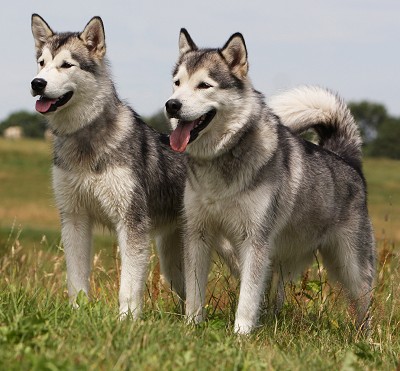
Why do these purebred Alaskan Malamutes look so much alike?
When you breed two Alaskan Malamutes together, why do the puppies grow up to look like their parents?
Because each breed has its own unique set of genes. These genes produce the desired traits for that breed, including size, coat, color, whether the ears prick up or hang down, and so on.
As each breed was being developed, its breeders decided which traits were desired for that breed. For example, small size was chosen for Cairn Terriers, while medium size was chosen for Border Collies. Long coat was chosen for Old English Sheepdogs, while short coat was chosen for Rottweilers.
When dogs with the desired traits were bred, the genes carrying those traits were spread throughout the gene pool of that breed.
For example, the established genes for a Labrador Retriever include:
- medium-large size (21-25 inches, 50-90 lbs)
- a short coat that's easy to brush but sheds a lot!
- solid color (black, yellow, chocolate, silver/gray)
- floppy ears
Unless some weird genetic mutation occurs, you won't see a 15-pound Lab, a 150-pound Lab, a prick-eared Lab, a long-coated Lab, or a spotted Lab, because the genes for those traits are not present in the gene pool of that breed. If those genes aren't present in any parents, those genes are not available to be passed on to any puppies.
So when you see a puppy who is a member of a particular breed, you have a pretty good idea which genes (and therefore which traits) he inherited, and which genes (and traits) he cannot have inherited because they're not in that breed's gene pool.
If you want a certain size dog, or a certain length of coat, you can choose a breed that has the genes for those traits. For many people, predictable appearance is the biggest advantage of purebred dogs.
You can predict SOME temperament/behavior traits in purebred dogs.
SOME aspects of temperament and behavior are also carried on genes. If you want an energetic dog, you can choose a breed who typically inherits genes for high energy.
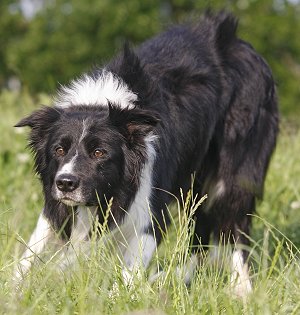
Ready to herd your sheep, goats, ducks... passing joggers and bicyclists... and probably your kids too
If you want a dog for herding your cattle, or guarding your sheep, or hunting pheasants or rabbits, or pulling a sled, or doing police work, you can choose a breed that tends to inherit those kinds of behaviors.
Now it's true that every dog has his own individual personality, his own quirks and idiosyncrasies that make him unique.
And every dog of every breed exhibits, at one time or another, intelligence, stupidity, playfulness, laziness, dignity, silliness, resourcefulness, confusion, confidence, uncertainty, a sense of humor, affection, independence, jealousy, sweetness, stubbornness, and so on.
But overall, most individuals within a breed are more likely to act "this way" than "that way".
- English Toy Spaniels are more likely to be placid than energetic, and Jack Russell Terriers are more likely to be energetic than placid.
- Beagles are more likely to make noise than Greyhounds are.
- A Chihuahua is more likely to threaten a stranger than a Basset Hound is.
Other aspects of temperament and behavior are NOT inherited. Instead, they're based mostly on the dog's environment (how he is raised and trained, starting from birth). Some dogs are more affected by their genes, while other dogs are more affected by their environment.
When a behavioral trait is "hardwired" into a dog's genes, it is often harder to change. Therefore, to minimize conflict and stress, look for a breed with a temperament/behavior that already sounds close to what you can handle.
DISadvantages of purebred dogs
Predictable physical traits means you're stuck with them.
Too many people acquire a purebred dog and then complain about traits that are hard-wired into its genes.
- "My Dalmatian sheds too much!"
- "My Pug snorts and snuffles!"
- "My Saint Bernard drools!"
I'm sorry, but if you choose a Golden Retriever, he will shed heavily, he will need regular trimming and weekly brushing, and his enthusiastic long tail will occasionally send breakables flying off your coffee table.
Physical traits are carried on genes. Specific genes come with each breed. You have to research a breed's genes before you buy!
Before you bring home a breed, make sure you can handle its physical chararacteristics. How much do they shed? How much brushing do they need? How much trimming or clipping? If they're large, can you provide enough exercise? If they're tiny, can you keep them safe? Remember, you're stuck with a breed's physical traits.
Same with temperament and behavior, though they're not inherited as predictably as physical traits. Instead, a dog inherits a strong tendency or predisposition to behave in certain ways, which you can often modify or manage through training. But modifying/managing is not the same as changing.
When considering a purebred, you have to be clear about what traits you want and what traits you don't want. Don't expect to easily "mold" a purebred dog into anything you want him to be. Some genes are much too strong for that.
Many purebreds have "working behaviors" that can be difficult to live with.
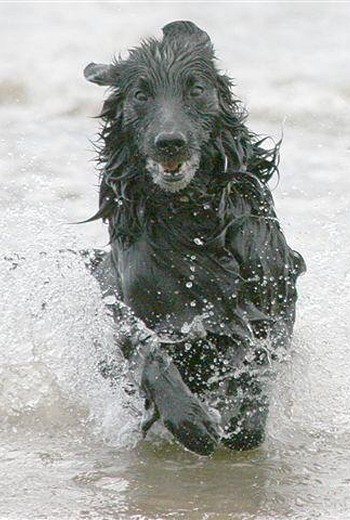
Hunting breeds such as Flat-Coated Retrievers were bred to work all day. Can you provide the exercise and mental stimulation that so many breeds need in order to feel satisfied?
Most breeds were developed to do some type of work – herding sheep or cattle, hunting pheasants, retrieving ducks, hunting rabbits or raccoons, killing barnyard vermin, protecting livestock, guarding estates, pulling carts or sleds, and police/military work.
As each breed was developed, it became obvious that if the breed had certain behavioral traits, he was a better worker. So those traits were "hardwired" into the breed's genes through selective breeding.
Behavioral traits that helped a breed do its work include:
- high energy level
- independent thinking (making their own decisions)
- strong desire to DO things, not just hang around the house and yard
- chasing, grabbing, or biting at things that run (such as small animals)
- putting their nose to the ground and taking off in pursuit of interesting scents
- aggression toward other animals
- digging holes
- suspiciousness or aggression toward strangers
- barking or howling
If you just want a family companion and pet, working behaviors can be a nuisance. And some working behaviors create legal liabilities, as powerful breeds with strong territorial or chasing instincts pose threats to other people and animals. Before choosing a largish dog with strong working behaviors, remember that we do live in a crowded society where people are quick to sue.
The reality is that most breeds were never intended to be "just" pets, and trying to stuff a square dog into a round home can end up frustrating both you and the dog.
Purebred dogs are not GUARANTEED to look or act the way you expect.
Up until now it might have sounded like all the members of a breed are robots who look and act exactly the same.
If that were true, you could simply decide which traits you want and choose a breed that's supposed to have those traits, and voila! As easy as ordering the right curtains from a department store catalog.
So here comes the other shoe dropping....
A purebred puppy can grow up to look or act differently than what you expected.
It's true. All the purebred "predictability" I've been talking about is TYPICAL – but not GUARANTEED. The reality is that some purebred dogs simply do not "conform to the norm" for their breed.
Physical traits are quite reliable, yes. Purebred Poodles shed very lightly. Get a Poodle puppy, and he will grow up to shed very lightly. That's the only option for shedding in the gene pool of this breed. And I told you earlier that you won't find a 15-lb Labrador, because genes for that size aren't present in this breed's gene pool.
A 15-pound Chihuahua??
Yep, no 15-lb Labs, but you might find a 15-lb Chihuahua. In fact, quite a few Chihuahuas are larger than the 3 to 7 pound weight called for in their Breed Standard. Many owners are disappointed when they bring home a tiny Chihuahua puppy who grows to be 10 or 12 or even 15 pounds.
- Now, some of these "oversize" dogs are just overfed and underexercised.
- Some of them aren't truly purebred. Man, if I had a dollar for every Chihuahua cross or Chihuahua mix palmed off as purebred...
- But some of them are fed and exercised properly and are purebred. They simply inherited genes for a somewhat larger size than normal because those genes are present in this breed's gene pool.
With some physical traits, your mileage may vary
Two Longhaired Chihuahuas will always produce Longhaired Chihuahua puppies... but one pup may have such a thick heavy coat that it looks like a Pomeranian while another pup from the same litter has a shortish coat with some longer hairs on its ears, legs, and tail. Yet they're both Longhaired Chihuahuas.
Labrador Retrievers come in a yellow color that varies from gold to cream to almost white.
Physical variations can occur when a trait isn't governed by ONE gene, but by a combination of genes. For example, yellow color in Labs is controlled by a gene for type of pigment, a gene for concentration of pigment, a gene for distribution of pigment, and so on. Thus, yellow Lab pups who inherit different combinations end up different shades of yellow.
Some Bernese Mountain Dogs weigh an agile 65 pounds. Others weigh 130 pounds and lumber around like Saint Bernards.
Some Jack Russell Terriers (Miniature Poodles, too) have a square build with long legs, while others have a long body with short legs. In both cases, the first build is correct and healthy, while the second build is caused by defective genes and has more health issues.
In many breeds, it's not enough to research just the breed – you should also research the different variations within the breed so that you end up with the type of dog you really wanted.
Purebred dogs can have a lot of health problems.
- Crippling bone and joint disorders
- Eye diseases that cause reduced sight or total blindness
- Heart diseases that drastically shorten a dog's life
- Endocrine system diseases like hypothyroidism and diabetes
- Seizure disorders such as epilepsy
- Skin diseases that cause frantic itching
- Digestive disorders that cause chronic diarrhea and vomiting
- Kidney and liver diseases
- Blood-clotting diseases
- Cancer – the #1 killer of many, many breeds
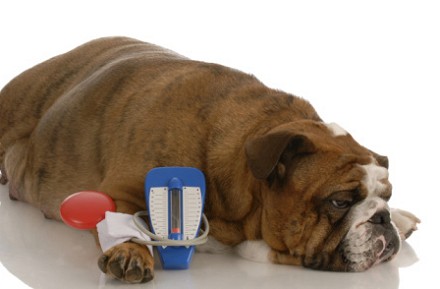
English Bulldogs have endearing personalities, but are one of the unhealthiest of all breeds.
You're probably shocked by that long list of health problems.
And you should be.
Over 300 genetic health problems occur in dogs. All kinds of dogs.... but the risk of health problems occurring in a purebred dog is far higher than in a crossbreed or mixed breed.
Why are purebred dogs so unhealthy?
Purebred dogs have so many health problems because:
- They're too inbred. [read more]
- Some breeds are structurally deformed. [read more]
- Most parent dogs are not tested for specific health problems before being bred. [read more]
- Dogs are fed the wrong foods, excessively vaccinated, and exposed to too many chemicals – all of which stresses their immune system, which makes them more susceptible to illness and disease. [read more]
To sum up, a purebred dog can be a good choice...
- if you know exactly which canine traits you want and can provide for.
- if there is a breed that actually HAS all the traits you want (and none of the traits you don't want) – this is highly unlikely, as compromise is almost always required when choosing a dog breed).
- if you're willing to accept (and can handle) whatever other traits that breed happens to have.
- if you're willing to accept the greater potential for health problems (much worse in some breeds than in others) and if you're able to pay whatever vet bills your pup might run up over the coming months and years.
- if you're willing to pay hundreds of dollars for a well-bred puppy – or else adopt an adult dog through an animal shelter or rescue group.
- if you acquire your puppy from someone who is doing all the right things to produce good-tempered, healthy family pets.
There are 15 things a breeder should be doing to produce healthy, stable-tempered FAMILY COMPANIONS.
Also read about crossbred dogs
Also read about mixed breed dogs
 About the author: Michele Welton has over 40 years of experience as a Dog Trainer, Dog Breed Consultant, and founder of three Dog Training Centers. An expert researcher and author of 15 books about dogs, she loves helping people choose, train, and care for their dogs.
My best-selling books – now available FREE on my website
 Respect Training For Puppies: 30 seconds to a calm, polite, well-behaved puppy is for puppies 2 to 18 months old. Your puppy will learn the 21 skills that all family dogs need to know. Click here to read for free.
 Teach Your Dog 100 English Words is a unique Vocabulary and Respect Training Program that will teach your adult dog to listen to you and do what you say. Click here to read for free.
 11 Things You Must Do Right To Keep Your Dog Healthy and Happy helps your dog live a longer, healthier life. Get my honest advice about all 11 Things before you bring home your new puppy, because some mistakes with early health care cannot be undone. Click here to read for free.