

Pet Shop Puppies: Buying a Puppy From a Pet Store
By Michele Welton, Dog Trainer, Breed Selection Consultant, Author of 15 Dog Books
Every pet shop will assure you, solemnly, that their puppies are different. Their puppies don't come from puppy mills, but from wonderful local breeders.

Pillars of the community, in fact.
It's not true. It is, in fact, a big fat lie, told right to your face.
No responsible breeder – none, zero, nada – would place one of their puppies in a pet shop.
Why not?
- Responsible breeders would never expose their vulnerable little puppies to illnesses from all those other puppies in the pet shop.
- Responsible breeders wouldn't be able to sleep at night, worrying that their beloved puppies could be sold to unsuitable homes by sales clerks who know nothing about dogs.
Typical "assurances" from pet shop people
"We buy our puppies from responsible local breeders."
Pet shop employees are taught to say that. But saying doesn't make it so.
All pet shop puppies come from commercial breeders, puppy mills, and other irresponsible breeders.
And the local part?
Matters not a whit. Irresponsible breeding practices are irresponsible whether the breeder lives in Timbuktu or just around the corner. The location makes no difference.
"We buy only from USDA-licensed breeders."
 USDA stands for the United States Department of Agriculture, which deals with farming and livestock.
The USDA knows nothing about proper care of dogs. As long as a breeder's paperwork is in order, the facilities are disinfected, cages are a (very) minimum size, and no infectious diseases are immediately obvious, the kennel passes.
The USDA has no interest in....
- whether the breeder knows anything about that breed
- whether the dogs used for breeding actually look and act like their breed
- whether the dogs used for breeding are free of serious inherited health problems such as hip dysplasia, eye diseases, or heart defects – all of which show up long after you buy the puppy
A USDA license is not something that should reassure you. On the contrary, a USDA license is a warning sign that a breeder may be cranking out far too many puppies.
"Our puppies' health is guaranteed!"
Ah, yes. The "wonderful" pet store guarantee. Pet shops offer to REPLACE unhealthy puppies – instead of trying to prevent those health problems in the first place by requiring their "wonderful" breeders to do specific health tests and certifications on every parent dog used for breeding.
 Let's look at this from the PUPPY'S point of view, shall we? Guarantees don't help the PUPPY at all.
Sure, you may get your money back, but the PUPPY still has to live with the health problem that would have been avoided if the breeder had been seeking to produce healthy lives instead of trying to keep his expenses down.
Pet shops aren't too worried about having to honor their guarantees, by the way.
- First, they count on you becoming attached to the puppy. They know that people with soft hearts will usually keep a sick puppy even when forced to spend a thousand dollars and many heartbreaking months (or years) trying to cope with the health problems.
- Second, the guarantees are carefully written by legal wizards. Whatever your puppy develops probably isn't covered. Or else they'll deny your claim because you don't have the "proper" documentation to prove it.
- Third, many genetic health problems don't show up for months or years. Either the guarantee has expired by then, or you're completely unwilling to give up a dog you've had that long.
My advice to you is to ignore everything pet shop people tell you. Everything. The pet store industry has professional marketing manuals and training programs that teach their employees exactly what to say to persuade you to part with your money.
The advantages of pet shops
Advantages? Yes, pet shops do have advantages, which is why people buy from them.
 Instant access to LOTS of puppies. No question about it, it can take a lot of time and effort to track down an available puppy for sale from a responsible breeder or rescue group. In fact, with less common breeds, you'll probably find no current litters at all. Then your only option would be to put your name on a waiting list. And wait.
Whereas the pet shop is just a short drive away and open all day, 6 or 7 days a week. There are pet shops in neighboring communities, too. You just make the rounds until you find something you like. A pet shop may even be able to "order" a puppy for you from their warehouse. Like a sofa.
Pet shops satisfy buyers who are impulsive and impatient.
Anyone with enough money can buy. No applications or references required at pet shops. If your credit card goes through, you've bought yourself a puppy.
Pet shops satisfy buyers who don't like the idea of the "screening" process they face from animal shelters, rescue groups, and most good breeders.
Convenience. Immediacy. No questions asked. Those are the advantages of pet shops. The ONLY advantages. Problem is, almost no one who buys from a pet shop pauses to consider all the DISadvantages. Let's do that now.
The DISadvantages of pet shops
 Pet shop puppies come from parents who were NOT tested for any genetic health problems. That puts those puppies at high risk for developing those health problems as they grow up.
I don't mean a general health certificate from a vet! Pet shop puppies always have those. All they mean is that the puppy doesn't have an infection like distemper. I'm talking about sophisticated tests done on the puppy's parents to evaluate the soundness of their hips and elbows and heart, and the health of their eyes. Those are the kinds of tests all responsible breeders do. None of the irresponsible breeders who place their puppies in pet shops do these tests.
Some of these health tests can determine with 100% accuracy whether a puppy has inherited a particular health problem. Other health tests can't say for sure, but can predict the risk. Again, responsible breeders do these tests. Breeders who sell to pet stores don't.
Pet shop puppies are frequently inbred, which increases the risk of health problems. You need a pedigree to look for inbreeding and most pet shops don't have a copy of the pedigree for you to look at. Instead they promise to mail it to you – after you've bought the puppy. That's no help.
Pet shop puppies may have false registration papers and pedigrees. Many pet shops avoid the stricter documentation requirements of the American Kennel Club and instead register their puppies with an "alternative" registry such as the Continental Kennel Club, APR, APRI, NKC, and others.
Now, it's true that the AKC has its own problems with faked registration papers. But the alternative registries are even worse. If a puppy has papers from any of those registries, I wouldn't trust that the parents listed on the papers are necessarily the true parents. I wouldn't trust that the ancestors listed on the pedigree are necessarily the true ancestors. I wouldn't even trust that the puppy is purebred.
You can't see the puppy's parents. This is a huge negative. Huge. A puppy's parents (especially the mother) can have so much influence on how a puppy turns out. If you can't see the parents, how can you tell whether they might have passed on genes for an unhealthy structure or rotten teeth or bad temperament?
 Most puppies look normal and healthy and friendly. But as they grow up, the genes they inherited will begin to assert themselves, and that's when all the problems will start.
Many pet shop puppies are hyperactive and noisy. Raised in a small cage, they haven't been able to run and play like normal puppies. So they develop frenetic habits like running in small circles and excessive barking.
Many pet shop puppies are nippy. Some were removed from their mother before 7 weeks of age. Puppies need a full seven weeks with their mother so she can teach them "bite inhibition" (how to control their mouth and not bite too hard). If they haven't learned this lesson, their nippiness will be harder to correct.
Pet shop puppies also learn to nip from customers taking them out of their cage and playing wrestling games with them. This encourages the puppy to growl and nip and grab people's hands.
Many pet shop puppies are hard to housebreak. Where does the puppy go to the bathroom? Right there in his cage. It's hard to take such a puppy home and teach him NOT to soil his crate or bed when that's what he's been trained to do. Most pet shop puppies, you see, were born and raised in wire-bottomed cages in outbuildings.
Pet shop puppies may come with hidden illnesses. All seems well when you bring the puppy home, but a week later he develops a raspy cough, or diarrhea, or listlessness, or he starts scratching.
Kennel cough, parvovirus, coronavirus, giardia, coccidia, mange, ringworm – these illnesses can be transmitted when many dogs share the same living space. The illness may lie dormant until after you bring the puppy home.
Finally, a major disadvantage of acquiring a pet shop puppy is this....
You're supporting a bad industry. When you pay money for a pet shop puppy, you're encouraging the industry to keep doing what it's doing.
You've emptied one cage, yes – but that creates demand for another puppy to be born to fill that cage. Even if you get lucky and YOUR puppy turns out "okay", a large percentage of the others will not. And you provided the incentive for them to be born by buying the one who came before them.
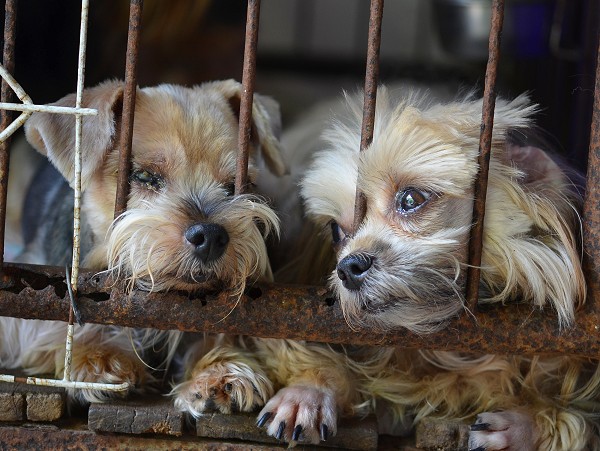
So what seems like a simple, isolated purchase actually contributes to:
- The misery of the female dogs who will spend their lives in a small cage, being bred again and again so people will have a "quick and convenient" source from which to buy.
- The misery of the puppies born with health and temperament problems.
- The misery of the families who will buy these puppies and then struggle to cope with all the health and temperament problems.
- The misery of the animal rescue groups who have to deal with all the pet shop puppies dumped on their doorstep when frustrated families give up on the health and temperament problems.
I hope you can see that when you buy one of those cute puppies in the pet shop, you buy more than the puppy. You buy all of the potential physical, behavioral, and health problems, and you feed a profit-hungry industry that is harming innocent creatures. Just something to think about.
 About the author: Michele Welton has over 40 years of experience as a Dog Trainer, Dog Breed Consultant, and founder of three Dog Training Centers. An expert researcher and author of 15 books about dogs, she loves helping people choose, train, and care for their dogs.
My best-selling books – now available FREE on my website
 Respect Training For Puppies: 30 seconds to a calm, polite, well-behaved puppy is for puppies 2 to 18 months old. Your puppy will learn the 21 skills that all family dogs need to know. Click here to read for free.
 Teach Your Dog 100 English Words is a unique Vocabulary and Respect Training Program that will teach your adult dog to listen to you and do what you say. Click here to read for free.
 11 Things You Must Do Right To Keep Your Dog Healthy and Happy helps your dog live a longer, healthier life. Get my honest advice about all 11 Things before you bring home your new puppy, because some mistakes with early health care cannot be undone. Click here to read for free.