
Nova Scotia Duck Tolling Retrievers: What's Good About 'Em, What's Bad About 'Em
Nova Scotia Duck Tolling Retriever temperament, personality, training, behavior, pros and cons, advice, and information, by Michele Welton, Dog Trainer, Behavioral Consultant, Author of 15 Dog Books

To the casual eye, the Nova Scotia Duck Tolling Retriever looks somewhat like a Golden Retriever, but with a more copper-colored coat and white markings. But in temperament, these breeds are very different.
Compared to Golden Retrievers, most Tollers are less submissive, less outgoing with strangers, and less adaptable to a low-exercise household. This high-energy breed is a joy in the right hands – but "too much dog" for someone who is looking for an eager-to-please couch potato.
High-spirited and playful, quick moving and agile, the Nova Scotia Duck Tolling Retriever needs plenty of exercise, especially fetching and swimming. Mental exercise (advanced obedience, agility, tracking, field work) is just as important. This breed is not a good choice for a casual pet.
Reaction to strangers varies from reserved to curious, but often includes some initial caution. He needs early and ongoing socialization to avoid suspiciousness or timidity.
The Toller is usually fine with other family pets. He may chase your cat, but seldom means any harm.
Though bright and clever, most Nova Scotia Duck Tolling Retrievers are easily distracted and easily bored, which can make training more difficult. Other Tollers are surprisingly strong-willed, testing your rules to see what they can get away with. You must demonstrate consistent leadership and keep training sessions short, upbeat, and challenging.
As with all retrievers, the Toller can be "mouthy" – you must control his tendency to chew on objects and to mouth your hands. Provide a box filled with toys so he can carry something around in his mouth.
When excited or anxious, Tollers tend to whine and "whistle", which can be irritating when done to excess.
If you want a dog who...
- Is medium-sized, active, and athletic
- Has a lovely feathered coat in shades of orange/red
- Is high-spirited and thrives on vigorous athletic activities
- Is good-natured and dependable
- Excels in competitive activities such as obedience and agility
A Nova Scotia Duck Tolling Retriever may be right for you.
If you don't want to deal with...
- Vigorous exercise requirements
- Rowdiness and exuberant jumping, especially when young
- Destructiveness when bored or not exercised enough or left alone too much
- Fearfulness or suspiciousness when not socialized enough
- Strong-willed mind of his own, requiring a confident owner who can take charge
- Regular brushing and combing
- Shedding
- Barking or whining when excited
A Nova Scotia Duck Tolling Retriever may not be right for you.
 |
Dog Breed Traits – Which Traits Are Right For You? In this brand new series, I'll help you decide which dog breed traits would best suit you and your family, your home and yard, and your lifestyle, so you can choose the best dog breed for your family. |
Keep in mind that the inheritance of temperament is less predictable than the inheritance of physical traits such as size or shedding. Temperament and behavior are also shaped by raising and training.
FREE eBooks by Michele Welton
 "Respect Training for Puppies" and "Teach Your Dog 100 English Words" are free step by step guides to teaching your pup to be calm and well-behaved.
 "11 Things You Must Do Right To Keep Your Dog Healthy and Happy" is a free guide to keeping your dog mentally, physically, and emotionally happy and healthy so you can enjoy a longer lifetime of companionship.

- You can avoid some negative traits by choosing an ADULT dog from an animal shelter or rescue group. With an adult dog, you can easily see what you're getting, and plenty of adult Tollers have already proven themselves not to have negative characteristics.
- If you want a puppy, you can avoid some negative traits by choosing the right breeder and the right puppy.
More traits and characteristics of the Nova Scotia Duck Tolling Retriever
If I was considering a Nova Scotia Duck Tolling Retriever, I would be most concerned about...
- Providing enough exercise and mental stimulation. Duck Tollers were bred to be working dogs – not simply pets to hang around the house or backyard. Too many people acquire this breed because of its athletic prowess and handsome appearance; then they don't provide enough opportunities for the dog to vent his energy and do interesting things. Bored Tollers express their frustration by barking and destructive chewing.
If you want an easy-to-live-with pet who doesn't need much exercise and sleeps most of the day, this is not the breed for you. Most Tollers want to run and hike and swim and play fetch games and participate in field work (hunting), or agility (obstacle course), or advanced obedience, or tracking, or a similar canine activity. Many fun activities are included in my free online book, Teach Your Dog 100 English Words.
- Mind of their own. Unlike most Golden Retrievers, most Tollers have an independent mind of their own and can be manipulative or willful. You must show them, through absolute consistency, that you mean what you say. To teach your Toller to listen to you, "Respect Training" is mandatory. Follow my free online training program, Respect Training for Puppies.
- Providing enough socialization. Compared again to Golden Retrievers, most Nova Scotia Duck Tolling Retrievers do not greet strangers with blind enthusiasm. Many Tollers, in fact, are standoffish and need extensive exposure to people and to unusual sights and sounds. Otherwise their natural caution can become shyness or suspiciousness.
- Grooming and shedding. To keep their pretty feathered coat free of mats, Tollers require regular brushing and combing, and occasional trimming. And they shed quite a bit, so be prepared for vacuuming!
 About the author: Michele Welton has over 40 years of experience as a Dog Trainer, Dog Breed Consultant, and founder of three Dog Training Centers. An expert researcher and author of 15 books about dogs, she loves helping people choose, train, and care for their dogs.
My best-selling books – now available FREE on my website
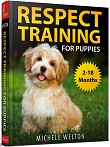 Respect Training For Puppies: 30 seconds to a calm, polite, well-behaved puppy is for puppies 2 to 18 months old. Your puppy will learn the 21 skills that all family dogs need to know. Click here to read for free.
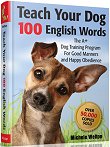 Teach Your Dog 100 English Words is a unique Vocabulary and Respect Training Program that will teach your adult dog to listen to you and do what you say. Click here to read for free.
 11 Things You Must Do Right To Keep Your Dog Healthy and Happy helps your dog live a longer, healthier life. Get my honest advice about all 11 Things before you bring home your new puppy, because some mistakes with early health care cannot be undone. Click here to read for free.
Related posts you might enjoy