
Lhasa Apsos: What's Good About 'Em, What's Bad About 'Em
Lhasa Apso temperament, personality, training, behavior, pros and cons, advice, and information, by Michele Welton, Dog Trainer, Behavioral Consultant, Author of 15 Dog Books
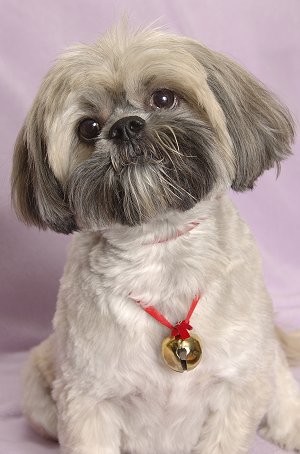
Too many people buy a Lhasa Apso puppy based on his brash and comical antics, envisioning a cuddly lapdog.
In truth, the adult Lhasa Apso is one of the hardiest, toughest, and strongest-willed of all the small breeds. It is said that "when a Lhasa Apso looks in the mirror, he sees a lion."
Though he can certainly be playful, the adult Lhasa carries himself with regal dignity. Rather calm and deliberate in nature, he makes a mannerly house dog IF you can establish a relationship of mutual respect – i.e., admiring his independent character while consistently enforcing your rules so that he respects you as well.
The AKC Standard calls the Lhasa Apso "chary with strangers." Chary means cautious or wary, and indeed he is. With his acute senses, keen observation skills, and distrust of anything new or different, Lhasas take their watchdog responsibilities seriously.
Unfortunately some individuals are not just "all bark" and may be very willing to bite if pushed. Lhasa Apsos need early socialization with people to ensure that they don't become too sharp.
With other animals, the Lhasa can be bossy and jealous Yet despite squabbles, most Lhasas do live more or less peacefully with other family pets.
Very smart, but also dominant and manipulative, the Lhasa Apso can be a challenge to train. They cannot be forced to do anything, nor will they meekly accept harshness or teasing. Training methods that emphasize food and praise, plus limited and fair corrections, will be met with much more cooperation.
If you want a dog who...
- Is small, but substantial and sturdy – not a "sissy" dog at all
- Has a long coat (can be clipped short, if desired) that comes in many colors and patterns
- Can be playful, yet also carries himself with dignity and is rather calm and deliberate in nature
- Makes a mannerly house dog
- Doesn't need a lot of exercise
- Is very loyal to his own family and makes a keen watchdog
A Lhasa Apso may be right for you.
If you don't want to deal with...
- Potential suspiciousness toward strangers
- Strong-willed mind of his own, requiring a confident owner who can take charge
- Lots of brushing and combing (or regularly clipping the coat short)
A Lhasa Apso may not be right for you.
 |
Dog Breed Traits – Which Traits Are Right For You? In this brand new series, I'll help you decide which dog breed traits would best suit you and your family, your home and yard, and your lifestyle, so you can choose the best dog breed for your family. |
Keep in mind that the inheritance of temperament is less predictable than the inheritance of physical traits such as size or shedding. Temperament and behavior are also shaped by raising and training.
FREE eBooks by Michele Welton
 "Respect Training for Puppies" and "Teach Your Dog 100 English Words" are free step by step guides to teaching your pup to be calm and well-behaved.
 "11 Things You Must Do Right To Keep Your Dog Healthy and Happy" is a free guide to keeping your dog mentally, physically, and emotionally happy and healthy so you can enjoy a longer lifetime of companionship.

- You can avoid some negative traits by choosing an ADULT dog from an animal shelter or rescue group. With an adult dog, you can easily see what you're getting, and plenty of adult Lhasas have already proven themselves not to have negative characteristics.
- If you want a puppy, you can avoid some negative traits by choosing the right breeder and the right puppy.
More traits and characteristics of the Lhasa Apso
If I was considering a Lhasa Apso, I would be most concerned about...
- Their suspiciousness. Some Lhasas are perfectly friendly toward everyone. But most are not, and without careful socialization, a Lhasa Apso may be suspicious of everyone, which could lead to biting.
- The strong temperament. Lhasa Apsos have an independent mind of their own and are definitely not pushovers to raise and train. Many are willful, obstinate, and bossy. You must show them, through absolute consistency, that you mean what you say. To teach your Lhasa Apso to listen to you, "Respect Training" is mandatory. Follow my free online training programs.
- All the grooming. Without frequent brushing and combing, the long hair becomes a matted mess. If you can't commit to the brushing, you have to commit to frequent trimming to keep the coat short and sanitary. Personally, I think clipped Lhasas look great – like perpetual puppies! (See the photo at the very top of the page.)
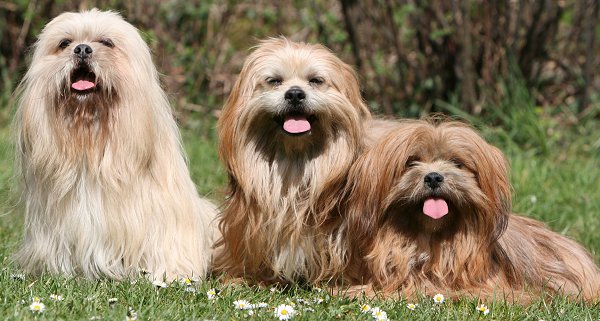
- Defensive reactions. If you need to physically chastise a Lhasa Apso, and you go beyond what THEY believe is a fair correction, they are more likely than other breeds to growl or snap. As an obedience instructor, I'm always extra careful when putting my hands on a Lhasa for a correction.
I do not recommend Lhasa Apsos for small children. Many Lhasa will not tolerate any nonsense from little life forms whom they consider to be below themselves in importance. Many Lhasas are quick to react to teasing, and even to the normal clumsiness that comes with small children (accidental squeezing of their ears or pulling of hair or stepping on their paw). Many Lhasas are possessive of their food and toys and will defend these from all comers, including children.
 About the author: Michele Welton has over 40 years of experience as a Dog Trainer, Dog Breed Consultant, and founder of three Dog Training Centers. An expert researcher and author of 15 books about dogs, she loves helping people choose, train, and care for their dogs.
My best-selling books – now available FREE on my website
 Respect Training For Puppies: 30 seconds to a calm, polite, well-behaved puppy is for puppies 2 to 18 months old. Your puppy will learn the 21 skills that all family dogs need to know. Click here to read for free.
 Teach Your Dog 100 English Words is a unique Vocabulary and Respect Training Program that will teach your adult dog to listen to you and do what you say. Click here to read for free.
 11 Things You Must Do Right To Keep Your Dog Healthy and Happy helps your dog live a longer, healthier life. Get my honest advice about all 11 Things before you bring home your new puppy, because some mistakes with early health care cannot be undone. Click here to read for free.
Related posts you might enjoy