
Bloodhounds: What's Good About 'Em, What's Bad About 'Em
Bloodhound temperament, personality, training, behavior, pros and cons, advice, and information, by Michele Welton, Dog Trainer, Behavioral Consultant, Author of 15 Dog Books
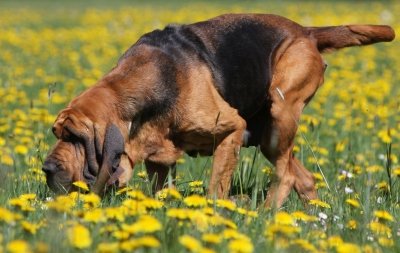
The AKC Standard says, "The expression is noble and dignified, and characterized by solemnity, wisdom, and power."
Though gentle and easygoing, even somewhat bumbling, the Bloodhound is not the lazy, lie-around dog he is often portrayed to be on TV.
This big breed requires plenty of space and safe areas where he can romp and ramble every day.
A leash and/or fence is mandatory, because if his tremendous nose locks on to a fascinating scent, his ears turn off and it is almost impossible to regain his attention. Bloodhounds will trail scents for miles and miles, until they are hit by a car.
Though generally good-natured and gregarious with people and other animals, some individuals can be aggressive with other dogs of the same sex.
His great strength and stubbornness call for a confident owner who knows how to enforce rules in an assertive (yet not harsh) manner. This kindly, sensitive breed should never be treated roughly.
Bloodhounds are very slow to mature, so your patience and firmness need to extend over several years.
His tendency to chew and swallow anything that fits in his mouth may send you both to the veterinary emergency room at some point.
Some Bloodhounds are possessive of their food and toys, a potential problem around children and other pets.
If you want a dog who...
- Is large, rugged, and powerful, with a houndy appearance (loose skin and long hanging ears)
- Has a short easy-care coat
- Has a dignified, solemn, kindly expression
- Loves the great outdoors and thrives on vigorous activities
A Bloodhound may be right for you.
If you don't want to deal with...
- A very large dog who takes up a lot of space in your house and car
- Rowdiness and exuberant jumping, especially when young
- Destructiveness when bored or not exercised enough
- Shyness toward strangers, when not socialized enough
- Potential aggression toward other animals
- Strong-willed mind of his own, requiring a confident owner who can take charge
- Slowness to housebreak
- LOUD baying
- A distinctive "houndy" odor
- Drooling and slobbering
- A short lifespan
A Bloodhound may not be right for you.
 |
Dog Breed Traits – Which Traits Are Right For You? In this brand new series, I'll help you decide which dog breed traits would best suit you and your family, your home and yard, and your lifestyle, so you can choose the best dog breed for your family. |
Keep in mind that the inheritance of temperament is less predictable than the inheritance of physical traits such as size or shedding. Temperament and behavior are also shaped by raising and training.
FREE eBooks by Michele Welton
 "Respect Training for Puppies" and "Teach Your Dog 100 English Words" are free step by step guides to teaching your pup to be calm and well-behaved.
 "11 Things You Must Do Right To Keep Your Dog Healthy and Happy" is a free guide to keeping your dog mentally, physically, and emotionally happy and healthy so you can enjoy a longer lifetime of companionship.

- You can avoid some negative traits by choosing an ADULT dog from an animal shelter or rescue group. With an adult dog, you can easily see what you're getting, and plenty of adult Bloodhounds have already proven themselves not to have negative characteristics.
- If you want a puppy, you can avoid some negative traits by choosing the right breeder and the right puppy.
More traits and characteristics of the Bloodhound
If I was considering a Bloodhound, I would be most concerned about...
- Providing enough exercise and mental stimulation. Bloodhounds are large, rugged hounds who need ample opportunities to run and play in a large enclosed area. Otherwise they become rambunctious and bored, which they usually express by baying and destructive chewing. Bored Bloodhounds can turn your house and yard inside-out in a single day.
Bloodhound owners should join their local tracking club and get their magnificent hounds involved in this potentially lifesaving activity. Bloodhounds were never intended to be simply household pets. Their working behaviors (following scents, chasing things that run, exploring, baying) can be a nuisance in a normal household setting. Trying to suppress these "hardwired" behaviors, without providing alternate outlets for their energy, is pretty nigh impossible. Also unfair to the dog.
- Running away from you. Like all dogs, Bloodhounds must be taught to come when called. But I would only count on this breed obeying his training in an enclosed area. Bloodhounds should not be trusted off-leash. The risk is too great that they will put their nose to the ground and take off in a purposeful and determined manner, oblivious to your frantic shouts. The handlers of Bloodhounds used for tracking keep their dogs on leash for a reason – they would be out of sight in the blink of an eye.
- Stubbornness. Bloodhounds have an independent mind of their own and are not pushovers to raise and train. Most Bloodhounds are extremely stubborn and will make you prove that you can make them do things.
To teach your Bloodhound to listen to you, "Respect Training" is mandatory. Read my free online training programs.
- Providing enough socialization. Bloodhounds need extensive exposure to people and to unusual sights and sounds. Otherwise their natural caution can become shyness or suspiciousness, which are difficult to live with.
- Bounciness. Young Bloodhounds (up to about two years old) can be bulls in a china shop. When they romp and jump, they do so with great vigor, and things can go flying, including people.
- Potential animal aggression. Bloodhounds are seldom used for hunting today, but some individuals still have instincts to chase and seize small fleeing creatures, though the family cat might be fine. A few Bloodhounds may be dominant or aggressive toward other dogs of the same sex.
- Noise. Bloodhounds should never be left outside in your yard, unsupervised. Their deep voice is extremely LOUD and carries a long way.
- Houndy odor. Like most scenthounds, Bloodhounds have a "doggy" odor that some people find disagreeable.
- Slobbering. Most people are not prepared for how much Bloodhounds slobber and drool, especially after eating and drinking.
- Housebreaking. All scenthounds are a little slow to pick up the housebreaking concept. Expect several months of consistent crate training before the light bulb goes on.
- Potential health problems. From joint diseases to heart disease to stomach disorders, Bloodhounds are risky in the health department. Read more about Bloodhound Health.
 About the author: Michele Welton has over 40 years of experience as a Dog Trainer, Dog Breed Consultant, and founder of three Dog Training Centers. An expert researcher and author of 15 books about dogs, she loves helping people choose, train, and care for their dogs.
My best-selling books – now available FREE on my website
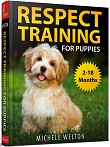 Respect Training For Puppies: 30 seconds to a calm, polite, well-behaved puppy is for puppies 2 to 18 months old. Your puppy will learn the 21 skills that all family dogs need to know. Click here to read for free.
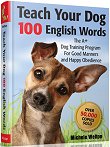 Teach Your Dog 100 English Words is a unique Vocabulary and Respect Training Program that will teach your adult dog to listen to you and do what you say. Click here to read for free.
 11 Things You Must Do Right To Keep Your Dog Healthy and Happy helps your dog live a longer, healthier life. Get my honest advice about all 11 Things before you bring home your new puppy, because some mistakes with early health care cannot be undone. Click here to read for free.
Related posts you might enjoy