
Beagles: What's Good About 'Em, What's Bad About 'Em
Beagle temperament, personality, training, behavior, pros and cons, advice, and information, by Michele Welton, Dog Trainer, Behavioral Consultant, Author of 15 Dog Books
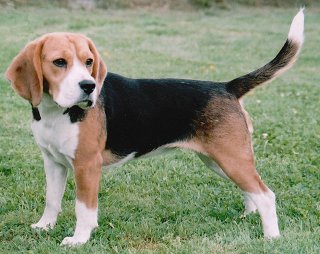
Beagles are conveniently-sized, handsome and easy-to-groom, friendly with people, peaceful with other pets. And with their appealing soulful expression, it's perfectly natural that many people consider them as potentially wonderful pets.
However, Beagles were developed as hunting hounds. They need much more exercise than most people give them, which is why you see so many fat Beagles.
Though they're often kept in city apartments or condos, they should not be. Beagles require long frequent walks and a fenced yard where they can stretch their legs off-leash – FENCED because Beagles are explorers and chasers who will follow their nose wherever that fascinating sight or smell takes them. And since Beagles (like most hunting hounds) are endowed with selective deafness, they seldom come back when you call them.
In addition, you can't leave them outside unmonitored, for Beagles are prone to wanderlust and can be adept climbers and diggers, i.e. escape artists. Also, Beagles left outside become bored and then they bay and howl and dig holes.
One more thing..... most Beagles are chowhounds, so keep your trash cans out of reach and never set your plate of food down where he can get to it.
The Beagle's vast stubbornness and distractability call for consistent and persistent training based on respect. Food rewards can be a great motivator for Beagles, but if you base all of your training on food, your Beagle will only obey when you have a cookie in your hand – obviously not a good situation.
If you want a dog who...
- Is conveniently-sized, sturdy, and athletic
- Is completely natural in appearance
- Has a short easy-care coat
- Loves exercise, play, and outdoor activities
- Is good-natured and peaceful with everyone
A Beagle may be right for you.
If you don't want to deal with...
- An extremely careful search to find good-tempered lines
- Providing a goodly amount of exercise, not just a couple of walks around the block
- Destructiveness when bored or not exercised enough
- An independent "what's in it for me?" attitude – can be obstinate
- Keeping him on-leash or securely fenced
- Controlling baying and howling
- Slowness to housebreak
- Moderate to heavy shedding
- A distinctive doggy odor
- Concerns about a lot of potential health problems in the breed
A Beagle may not be right for you.
 |
Dog Breed Traits – Which Traits Are Right For You? In this brand new series, I'll help you decide which dog breed traits would best suit you and your family, your home and yard, and your lifestyle, so you can choose the best dog breed for your family. |
Keep in mind that the inheritance of temperament is less predictable than the inheritance of physical traits such as size or shedding. Temperament and behavior are also shaped by raising and training.
FREE eBooks by Michele Welton
 "Respect Training for Puppies" and "Teach Your Dog 100 English Words" are free step by step guides to teaching your pup to be calm and well-behaved.
 "11 Things You Must Do Right To Keep Your Dog Healthy and Happy" is a free guide to keeping your dog mentally, physically, and emotionally happy and healthy so you can enjoy a longer lifetime of companionship.

- You can avoid some negative traits by choosing an ADULT dog from an animal shelter or rescue group. With an adult dog, you can easily see what you're getting, and plenty of adult Beagles have already proven themselves not to have negative characteristics.
- If you want a puppy, you can avoid some negative traits by choosing the right breeder and the right puppy.
More traits and characteristics of Beagles
If I was considering a Beagle, I would be most concerned about...
- Unstable temperaments. Beagles are supposed to be a stable, reliable breed. Unfortunately, obedience instructors and behavioral consultants, like myself, see too many Beagles who are fearful or neurotic. If you're considering a Beagle puppy, you need to look carefully at the temperament of BOTH parents.
- Providing enough exercise. Beagles need more exercise than the typical amble around the block that many owners give them. Beagles who don't get enough exercise become bored, destructive, noisy, and/or obese, which puts stress on their joints and causes health problems. Beagles need regular opportunities to stretch their legs and RUN, if you want them to remain healthy and fit.
But Beagles should run inside an enclosed area like a yard or dog park. You shouldn't trust these dogs off-leash – they will follow their nose wherever it leads them and pursue anything that runs.
- Fence security. Many Beagles are clever escape artists who will go over or under fences in search of adventure. You may need higher fences than you might imagine for their small size. They can climb chain link. You may also need to sink wire into the ground along the fence line to thwart digging. Gates should have the highest quality locks, as some Beagles can open flimsy latches.
- Housebreaking. Many Beagles are a little slow to pick up on the housebreaking concept. Expect several months of consistent crate training before the light bulb goes on. Read more on housebreaking.
- Noise. Beagles should never be left outside in your yard, unsupervised. Their mournful baying and howling will have your neighbors calling the cops to report the nuisance, or quietly letting your Beagle out of his yard so he'll wander away and stop disturbing them.
- Stubbornness. Beagles are not easy to train. Truth be told, they are independent thinkers who don't particularly care about pleasing you. Food is a great motivator with Beagles, but too many cookies equals a fat Beagle. Also you don't want a dog who only obeys when you're waving a biscuit. Instead you should establish the right relationship between the two of you, where you are the leader and he is the follower. Read my free online training programs.
- Shedding and doggy odor. For such a shorthaired dog, Beagles shed much more than you might think – on the high side of average. In addition, like all scenthounds, Beagles have a distinct doggy odor.
- Potential health problems. Many Beagles live a good long life, but they are prone to a dismaying number of health problems, including itchy skin conditions, ear infections, many different eye disease, joint problems, hypothyroidism, diabetes, epilepsy, and heart disease. Read more about Beagle Health.
 About the author: Michele Welton has over 40 years of experience as a Dog Trainer, Dog Breed Consultant, and founder of three Dog Training Centers. An expert researcher and author of 15 books about dogs, she loves helping people choose, train, and care for their dogs.
My best-selling books – now available FREE on my website
 Respect Training For Puppies: 30 seconds to a calm, polite, well-behaved puppy is for puppies 2 to 18 months old. Your puppy will learn the 21 skills that all family dogs need to know. Click here to read for free.
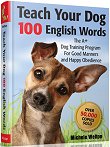 Teach Your Dog 100 English Words is a unique Vocabulary and Respect Training Program that will teach your adult dog to listen to you and do what you say. Click here to read for free.
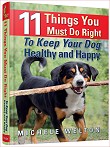 11 Things You Must Do Right To Keep Your Dog Healthy and Happy helps your dog live a longer, healthier life. Get my honest advice about all 11 Things before you bring home your new puppy, because some mistakes with early health care cannot be undone. Click here to read for free.
Related posts you might enjoy