
Basset Hounds: What's Good About 'Em, What's Bad About 'Em
Basset Hound temperament, personality, training, behavior, pros and cons, advice, and information, by Michele Welton, Dog Trainer, Behavioral Consultant, Author of 15 Dog Books
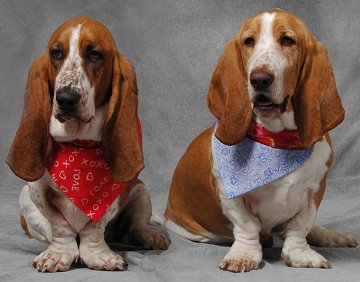
Basset Hounds are among the most pleasant-natured and easygoing of all breeds.
Some are dignified, but most are clownish. Almost all are reliably good-natured, sociable, and peaceful with everyone – strangers, children, and other pets, too. At a dog show, one can count on seeing cheerfully wagging tails in the Basset Hound ring.
However, this is not necessarily the easiest breed to live with or train! Many people are very surprised, when encountering a Basset Hound up close, at how bulky and heavy this breed really is. They may be short-legged, but Bassets weigh 50 or 60 pounds and need a moderate amount of daily exercise to stay fit, even if they appear to be content snoring in front of the fireplace. Lazy owners have fat Bassets with concurrent health problems.
When you do take your Basset Hound outdoors, you need to keep him in a fenced area or on-leash. This is a hunting hound with a powerful nose and a yen for the chase, and if he picks up an interesting scent and launches himself, your shouting and arm waving will fall on totally deaf ears. "Come" is not a command that Basset Hounds are eager to obey.
Indeed, Bassets are not eager to obey many commands. Stubborn and slow to obey (you should expect thoughtful, deliberate responses), the Basset Hound can exhibit an amusing sense of humor while doing his own thing. Yet he responds amiably to patient, consistent obedience training that includes lots of praise and encouragement.
Basset Hounds live for food, which is why so many of them are fat. They are champion beggers, and will steal any tidbit within reach – and be forewarned that when they rear up on their hind legs, their reach includes countertops!
Finally, Basset Hounds bay and howl (especially when bored), and they are notoriously slow to housebreak.
If you want a dog who...
- Is one of the most good-natured of all breeds
- Is sociable with people and other animals
A Basset Hound may be right for you.
If you don't want to deal with...
- Slowness to learn and an independent "what's in it for me?" attitude toward training
- Running away, oblivious to your calls, when an interesting scent catches his attention
- Slowness to housebreak
- Baying and howling
- Slobbering and drooling
- Snoring
- Heavy shedding (yes, even though he's shorthaired!)
- A distinctive houndy odor
- Gassiness (flatulence)
- Chronic health problems
A Basset Hound may not be right for you.
 |
Dog Breed Traits – Which Traits Are Right For You? In this brand new series, I'll help you decide which dog breed traits would best suit you and your family, your home and yard, and your lifestyle, so you can choose the best dog breed for your family. |
Keep in mind that the inheritance of temperament is less predictable than the inheritance of physical traits such as size or shedding. Temperament and behavior are also shaped by raising and training.
FREE eBooks by Michele Welton
 "Respect Training for Puppies" and "Teach Your Dog 100 English Words" are free step by step guides to teaching your pup to be calm and well-behaved.
 "11 Things You Must Do Right To Keep Your Dog Healthy and Happy" is a free guide to keeping your dog mentally, physically, and emotionally happy and healthy so you can enjoy a longer lifetime of companionship.

- You can avoid some negative traits by choosing an ADULT dog from an animal shelter or rescue group. With an adult dog, you can easily see what you're getting, and plenty of adult Bassets have already proven themselves not to have negative characteristics.
- If you want a puppy, you can avoid some negative traits by choosing the right breeder and the right puppy.
More traits and characteristics of the Basset Hound
If I was considering a Basset Hound, I would be most concerned about...
- Stubbornness. Basset Hounds are independent thinkers who don't particularly care about pleasing you. Most Basset Hounds are stubborn and can be manipulative. You must show them, through absolute consistency, that you mean what you say.
To teach your Basset Hound to listen to you, I recommend "Respect Training" is mandatory. Read my free online training programs.
- Providing enough exercise. Basset Hounds were originally bred to run for miles. Unfortunately, modern breeders deliberately breed them with a deformed structure that is unhealthy. These dogs cannot and should not run for miles, else they destroy their already-iffy joints and bones. But they do need more exercise than the typical slow walk around the block that many owners give them.
Basset Hounds who don't get enough exercise can become obese, which puts additional stress on their bones and joints and causes more health problems. Basset Hounds need regular opportunities to stretch their legs in a safely enclosed area, like a dog park, if you want them to remain healthy and fit.
- Running away from you. Like all dogs, Basset Hounds must be taught to come when called. But I would only count on this breed obeying his training in an enclosed area. Basset Hounds should not be trusted off-leash. The risk is too great that they will put their nose to the ground and take off in a purposeful and determined manner, oblivious to your frantic shouts.
- Housebreaking. Most (but not all) Basset Hounds are a little slow to pick up on the housebreaking concept. Expect several months of consistent crate training before the light bulb goes on. Read more on housebreaking.
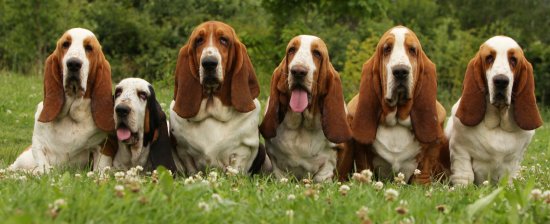
- Noise. Basset Hounds should never be left outside in your yard, unsupervised. Their deep voice carries a LONG way and the mournful baying and howling will have your neighbors calling the cops to report the nuisance – or quietly letting your Basset Hound out of his yard so he'll wander away.
- Slobbering. Many Basset Hounds, with their unnaturally heavy loose lips, slobber and drool, especially after eating and drinking.
- Shedding and houndy odor. For such a shorthaired dog, Basset Hounds shed much more than you might think. Their short coarse hairs come off on your hands when you pet them, and stick tenaciously to your clothing, upholstery, and carpeting. Also note that Basset Hounds have a distinctive "doggy" odor to their skin and coat that some people find disagreeable.
- Potential gassiness (flatulence) that can send you running for cover. Fortunately, Basset Hounds who are fed heavily meat-based diet have much less trouble with gassiness.
- Chronic health problems. Because of deformed build, long ears with narrow ear canals, and loose folds of skin, Basset Hounds suffer more than their share of bone and joint problems, ear problems, and skin diseases. See Basset Hound Health.
 About the author: Michele Welton has over 40 years of experience as a Dog Trainer, Dog Breed Consultant, and founder of three Dog Training Centers. An expert researcher and author of 15 books about dogs, she loves helping people choose, train, and care for their dogs.
My best-selling books – now available FREE on my website
 Respect Training For Puppies: 30 seconds to a calm, polite, well-behaved puppy is for puppies 2 to 18 months old. Your puppy will learn the 21 skills that all family dogs need to know. Click here to read for free.
 Teach Your Dog 100 English Words is a unique Vocabulary and Respect Training Program that will teach your adult dog to listen to you and do what you say. Click here to read for free.
 11 Things You Must Do Right To Keep Your Dog Healthy and Happy helps your dog live a longer, healthier life. Get my honest advice about all 11 Things before you bring home your new puppy, because some mistakes with early health care cannot be undone. Click here to read for free.
Related posts you might enjoy