

Puppy Shots and Dog Vaccinations: Needed or Not?
By Michele Welton, Dog Trainer, Breed Selection Consultant, Author of 15 Dog Books

Don't accept every shot your vet recommends. Many vets are not following the latest guidelines.
Do you have a new puppy, and it's time to take him to the vet for his shots? Or do you have an adult dog and it's time for yearly booster shots?
I'm glad you're reading this page.
The right vaccinations will help protect your dog's health – but unnecessary vaccinations can damage your dog's health.
Let's talk about this.
Only a few years ago, it was considered mandatory to bring your dog to the vet every year for his booster shots.
We've also been told that it's a good idea to get all of Jake's puppy shots rolled into a 7-in-one mega-injection.... then repeat it after a few weeks.... then again after another few weeks. After that, we were told he'd need yearly booster to keep him "current."
We knew it must be true because the vets told us so. The vets got their information from the vaccine manufacturers. The fact that vets and vaccine manufacturers have a financial incentive for urging us to get lots of shots for our dogs didn't seem to occur to us.
But times have changed. We consumers have our eyes open now. We know that what pharmaceutical companies, doctors, dog food companies and, yes, vets say is often biased by what's in it for them.
Let's see what other experts – leading vets and researchers – have to say about vaccinations.
 We'll start with Dr. Christina Chambreau DVM:
"Would you rebel if your doctor told you to get measles, mumps, rubella, diphtheria, pertussis, and hepatitis shots every year of your life until you died, instead of only a few doses as a child?"
People don't need yearly revaccinations for core diseases. And veterinary immunological researchers tell us: Neither do dogs and cats.
Kirk's Current Veterinary Therapy (the veterinarian's "bible") says....
 "A practice that was started many years ago that lacks scientific validity or verification is annual revaccinations. Almost without exception there is no immunologic requirement for annual revaccination. Immunity to viruses persists for years or for the life of the animal. Only the immune response to toxins requires boosters (for example, tetanus toxin booster, in humans, is recommended once every 7-10 years) and no toxin vaccines are currently used for dogs and cats."
That article was written by Dr. Ronald Schultz Ph.D. (Immunologist and Chairman of the Department of Pathobiological Sciences, University of Wisconsin School of Veterinary Medicine) and Dr. Tom Phillips DVM Ph.D.
That ground-breaking article has revolutionized our guidelines for vaccinating our pets.
Let's look at each sentence to be sure we understand.
- A practice that was started many years ago that lacks scientific validity or verification is annual revaccinations.
- Almost without exception there is no immunologic requirement for annual revaccination.
- Immunity to viruses persists for years or for the life of the animal.
- Only the immune response to toxins requires boosters (e.g. tetanus toxin booster, in humans, is recommended once every 7-10 years) and NO toxin vaccines are currently used for dogs and cats.
To sum up....NO annual vaccinations are needed for dogs or cats.
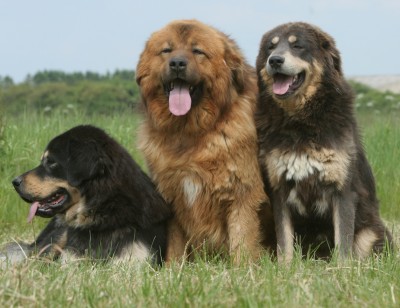
Tibetan Mastiffs – stately and majestic, but with a complex temperament unsuited to the average family
What is a vaccine?
Most people have a completely wrong idea of what a vaccine does. They think a vaccine is some powerful substance that, once injected, hangs around inside your dog until some disease shows up.... and then attacks and wipes out that disease.
No. A vaccine does not attack a disease.
A vaccine IS a disease.
 A vaccine is a "diluted (weakened) disease", such as distemper or parvovirus. Each "disease" is injected into your dog to show his immune system what that disease looks like. His immune system (assuming it is working properly) then makes antibodies against it. Antibodies are the warriors that fight disease.
The immune system contains memory cells. Once those memory cells have seen a particular disease (via one successful vaccination), the memory cells will remind the immune system to produce antibodies whenever that disease is encountered in real life.
This is such an important thing to understand, so I'm going to say it again, in a slightly different way.
A vaccine is simply a one-time catalyst that encourages your dog's immune system to produce antibodies. Or put another way, vaccines "trick" your dog's immune system into producing antibodies. Then the vaccine is done; it has no more role to play.
It is your dog's own immune system that protects him against disease. The vaccine's job is simply to show the immune system what a specific disease "looks like" so the immune system can recreate the appropriate antibodies to defeat it, if it ever shows up for real.
The question then becomes:
How many vaccinations are needed to "imprint" the memory of a virus like distemper or parvo on your dog's immune system so it will be able to produce antibodies if that virus ever shows up for real?
The OLD answer was: One vaccination every year. The "annual booster shot."
Well, it turns out that answer was wrong. Which isn't surprising, because it was never based on scientific evidence or immunological studies.
What was it based on, then? Drum roll.... are you ready for this?
Several decades ago, the vaccine manufacturers themselves (talk about conflict of interest!) chose one year as a nice round number. The USDA printed that recommendation on the vaccine label. The vets showed the label to their clients as proof. And the clients (us) nodded and wrote a check for our dog's "necessary annual booster".
Thankfully, veterinary immunologists now tell us that the immune system "has a memory." Yes, our immune system contains memory calls. Once these memory cells see what a particular virus looks like, the immune system remembers how to produce antibodies against that virus, probably for the dog's entire lifetime.
Annual reminders are not needed. In fact, annual reminders are useless, because....
That same article by Drs. Schultz and Phillips in Kirk's Current Veterinary Therapy goes on to say: "Furthermore, revaccination fails to stimulate a secondary response as a result of interference by existing antibodies."
In plain English.... booster shots don't work if your dog's system already has antibodies from previous vaccinations. The existing antibodies neutralize the booster shot.
So re-vaccinating an already-immune dog offers no benefit, because the previous immunity inactivates the vaccine.
Annual booster shots – but what's the harm?
You might be thinking, "Well, even if yearly shots aren't necessary, they don't do any harm, right?"
Unfortunately, that's not true.
Vaccines are not harmless. Remember, a vaccine is a weakened form of a disease. Repeatedly pumping multiple diseases into your dog can overwhelm and confuse his immune system.
Dr. Richard Pitcairn DVM (Ph.D. in immunology) explains that a vaccine may be viewed by your dog's immune system as some sort of bizarre invader.
"Injecting bacteria and viruses directly into tissues, and within minutes, into the blood system, is highly unnatural. The human or animal body evolved over millennia to watch for and react to organisms that were entering by the nose, mouth and intestinal tract. The primary defenses are there, and the process of recognizing invaders and alerting the immune system to their presence is elaborate and well understood. Vaccine injections bypass all of this and shock the immune system by the sudden presence in the blood for which there was no warning. To make it even more unnatural, several organisms are mixed together in vaccines, a condition simply not seen in natural infections. It is no surprise that the immune system gets confused and makes mistakes."
One of the most serious mistakes made by a confused immune system is to suddenly become hyper-reactive and begin attacking everything in sight within the dog's body.
That's what we call autoimmune disease, where the dog's own immune system suddenly goes on a rampage and destroys its own red blood cells, bone marrow cells, skin and connective tissue cells, thyroid cells, digestive tract cells...
...and that whole tragic process can be caused by the immune system getting overwhelmed and confused by too many vaccines.
Listen to what Dr. Charles Loops DVM has to say about the power of vaccines:
"The first thing that must change is the myth that vaccines are harmless. Veterinarians and animal guardians have to realise that they are not protecting animals from disease by annual vaccinations, but in fact are destroying the health and immune systems of these same animals they love and care for."
Dr. Christina Chambreau DVM agrees:
"Routine vaccinations are probably the worst thing that we do for our animals. Veterinary immunologists tell us that vaccines need only be given once or twice in an animal's life. First, there is no need for annual vaccinations and, second, they cause chronic disease."
Dr. Roger DeHaan DVM has this to say:
"Over the years it has become increasingly clear that some vaccines are ineffectual or unnecessary, and some vaccines are dangerous, even causing symptoms of the disease they are supposed to prevent."
Now, you might breathe a sigh of relief that your dog has "breezed through" his vaccinations with no immediate reactions. But in reality, you have no idea what is going inside him. The real problems may surface next month or next year.
Dr. Pedro Rivera DVM agrees that excessive vaccinations cause chronic disease:
"Vaccinosis is the reaction from common innoculations. Reactions might take months or years to show up."
Dr. Charles Loops DVM says:
"Vaccinations represent a major assault on the immune system [which] causes irregularities and abnormalities in the immune system, which then manifests as chronic diseases. What we are now seeing are generations of over-vaccinated animals."
You might breathe a sigh of relief when your dog seems to "breeze through" a vaccination with no immediate reaction. In reality, you have no idea what is going inside him. The real problems may surface in a few months.
Adverse reactions to vaccines include:
- immediate reactions: occur in the first 2 to 48 hours and include pain, swelling, itchy hives, and (rarely) breathing difficulties that can be life-threatening
- delayed reactions: occur 10-45 days later and include inflammatory joint stiffness or seizures
- long-term systemic effects: include permanent damage to the immune system, resulting in autoimmune diseases, increased susceptibility to allergies and infections, even neurological changes (fearfulness, anxiety, aggression)
So why are veterinarians still vaccinating every year?
Well, not all of them are. Most vets who practice holistic, alternative, or integrated medicine are not vaccinating every year.
Even some vets who practice conventional medicine have taken a step in the right direction by vaccinating every 3 years instead of every year.
But the majority of conventional veterinarians still insist that your dog come in every year for shots. Why do they do this?
Well, remember that ground-breaking article by Drs. Schultz and Phillips? That article ends with a bombshell that reveals the real reason why so many vets still insist that dogs require yearly vaccinations:
Drs. Schultz and Phillips write: "The practice of annual vaccination in our opinion should be considered of questionable efficacy unless it is used as a mechanism to provide an annual physical examination."
 In other words, your veterinarian gets dogs into his office by declaring that they need yearly shots.
Remember that veterinarians are running a business that needs to make money. Annual shots bring in income on a regular basis, and profit margins from vaccines are high. Plus you pay for the office visit, and you might pick up heartworm and flea preventative while you're there, and maybe a bag of kibble.
It's estimated that over 60% of vet visits are for vaccinations (the vast majority of which are unnecessary). Vets charge $30 to $50 for the office visit and $60 to $70 for vaccines that cost them a dollar each. Vaccinations account for such a major chunk of a vet's income that it's understandable why they fiercely resist when you tell them your dog isn't getting any more annual booster shots.
I do feel for their predicament, but they need to find some other way to generate income other than unnecessary vaccinations.
For example, regular physical exams are a very good thing, especially for older dogs. The vet can listen to their heart and do bloodwork to monitor their kidneys and liver. (In fact, I bring older dogs in every six months.) And if you live where heartworm is prevalent, your dog needs a heartworm blood test every year.
But vets should stop using the false pretext that "yearly shots are necessary" just to lure us into their offices. And we shouldn't compromise our dog's health by agreeing to vaccines that are unnecessary and potentially harmful.
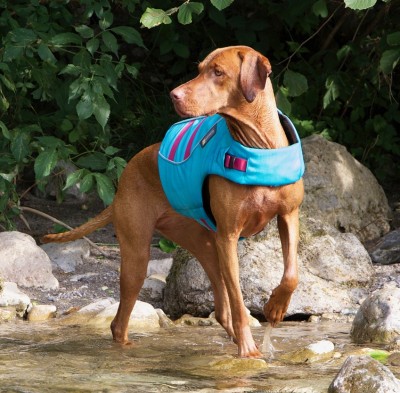
Vizsla – this high-energy breed needs loads of exercise out in nature; this is not a city breed!
Too many vaccines at one time
Along with the unnecessary repetition of vaccinations, many vets administer an unnecessary number of diseases given all at once.

Thai Ridgeback – rare in the US, a breed for experienced owners only
Most vets will try to administer 5 or more vaccines in one injection:
- distemper
- parvovirus
- canine hepatitis/adenovirus
- parainfluenza
- leptospirosis
Many vets will also recommend additional injections for:
- coronavirus
- bordetella (kennel cough)
- influenza (flu)
- Lyme
- rabies
Multi-vaccines are bad because the risk of side effects increases (according to a Purdue Veterinary College study) by 12-27% with each additional vaccine. So does the risk of immune system overload that can result in autoimmune diseases.
Multi-vaccines are also bad because so many of them are ineffective or protect against diseases that your dog doesn't need protecting against.
Which vaccines are really needed?
Distemper
Needed (but not every year).
Parvovirus
Needed (but not every year).
Canine Adenovirus (CAV-1 and CAV-2)
According to the vets I've referenced in this chapter, this vaccine is not needed by the vast majority of dogs. It's okay to give to adult dogs, but in puppies it causes immuno-suppression for 10 days – not a nice thing to do to vulnerable puppies!
Leptospirosis
According to the vets I've referenced in this chapter, this vaccine is not needed by the vast majority of dogs.
The lepto vaccine has more immediate and acute side effects reported than all other canine vaccines combined. And the more often it's given, the more likely it is to cause a serious reaction. The lepto vaccine is especially dangerous to small dogs. I never give lepto to my dogs.
Parainfluenza
According to the vets I've referenced in this chapter, this vaccine is not needed by the vast majority of dogs.
Coronavirus
According to the vets I've referenced in this chapter, this vaccine is not needed by the vast majority of dogs.
Kennel cough (bordetella)
According to the vets I've referenced in this chapter, this vaccine is not needed by the vast majority of dogs.
There are many different strains of kennel cough and this vaccine is only effective (or semi-effective) against a few of those strains. Worse, a significant number of dogs given this vaccine end up sneezing and hacking for days.
Lyme disease
According to the vets I've referenced in this chapter, this vaccine is not needed by the vast majority of dogs.
Lyme is an inflammatory bacterial disease transmitted by ticks. It's serious in humans, but though it can cause debilitating illness in some dogs, most dogs experience only a brief acute episode.
Unfortunately, the vaccine itself can cause inflammatory arthritis. Hunters who live in brushy areas laden with Lyme-carrying ticks might feel better if their hunting dogs were vaccinated against it. Since that's not me, I don't vaccinate against Lyme.
Influenza (flu)
This vaccine is a comparatively new product rushed onto the market. It doesn't even prevent canine flu, but only lessens the symptoms of it.
IF my dog had a weak respiratory system (say, a dog with chronic bronchitis or collapsing trachea, or a flat-faced dog like a Pug, Pekingese, or Bulldog) and IF that dog spent a significant time around lots of other dogs, I might consider giving this vaccine. Otherwise, no.
I'll let Dr. Martin Goldstein DVM weigh in here:
"No to the Lyme vaccine for dogs, to canine hepatitis and bordetella, parainfluenza and corona, all of which either don't work or aren't needed, and may cause harm. A big no to the existing leptospirosis bacterin, which has caused more allergic reactions than any other single ingredient in the standard canine DHLPP combo." (from his book, "The Nature of Animal Healing")
Rabies vaccination
Now we come to the vaccine that's responsible for more long-term health problems than any other vaccine.
According to numerous vets and immunologists, the rabies vaccine has been pretty clearly connected to the development of:
- autoimmune diseases
- an increase in inflammatory chemicals in the body, leading to chronic infections, allergies, and inflammatory ailments
- an increase in inflammatory chemicals in the brain, leading to seizure disorders or sudden onset of aggressive, anxious, destructive, or obsessive behaviors
Rat Terrier – a cool little breed, high-energy, intelligent but stubborn
Rabies is the only vaccination regulated by state and local laws.
Unfortunately, most municipalities are ignoring the scientific research that shows a single rabies vaccine is good for at least 5-7 years and probably longer.
All 50 states and most local municipalities still insist that you vaccinate your dog against rabies every 3 years. Some truly backward municipalities insist on EVERY year.
There is no scientific basis for this. These communities are acting based on emotional fears ("Eeek! Rabies!") rather than immunological truths. In so doing, they're putting the health and lifespan of our dogs at risk, for no benefit.
So the choice is whether to vaccinate your dog according to the schedule mandated by law or based on the scientific research.
Of course, I cannot advise anyone to break the law.
Some practical considerations are:
- You can't take your dog to a boarding kennel, doggy daycare, or obedience class without a "current" (whatever that is in your area) rabies certificate. You may not even be able to obtain a dog license.
- In some areas, veterinarians won't treat your dog without a "current" rabies certificate.
- If your dog bites someone and doesn't have a "current" rabies certificate, he must be quarantined for 10 days, to be sure he doesn't have the disease. He may be allowed to stay at home during this period, or he may be confiscated to a private facility. You will be subject to a misdemeanor charge and/or monetary fine. The person he bit may be worried enough to undergo preventive medical treatment for rabies, after which you may be sued for medical expenses and pain and suffering.
- If your dog has never had ANY rabies vaccination and is bitten or scratched by a rabid animal (typically a bat, skunk, fox, raccoon, coyote, or another dog or cat), your dog will die. This fact alone should make EVERYONE vaccinate their dog at least once.

a pair of Salukis – this independent sighthound breed has complicated needs and should live with an experienced owner
If you decide to follow the rabies law in your area:
- Give the rabies vaccination at late as possible. If the law says 6 months old or 12 months old, don't give it any earlier.
- Don't give the rabies vaccine within a month of any other vaccine. You want to minimize the overload.
- Give the rabies vaccine ONLY when your dog is healthy and unstressed. Don't give it immediately before or after (or during) an illness, a long trip, boarding, neutering, dental cleaning, etc.
- If your dog has ever had a bad reaction to the rabies vaccine, or if he has any serious health issues, ask your vet for a medical exemption if one is allowed by your state and local municipality.
- If allowed by your local laws, make sure the vet gives your dog the vaccine labeled 3 years and make sure he issues you a rabies certificate that says it's good for 3 years.
Ready for some dark, insane humor? The "3-year" vaccine and the "1-year" vaccine are the SAME vaccine. Only the label is different. It's an absolute farce, especially since according to current rabies vaccine studies, BOTH vaccines are good for at least 5-7 years!
Vaccination schedule for puppies
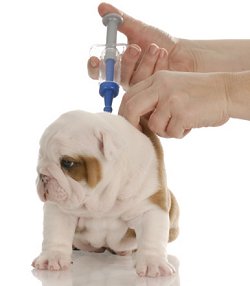
Sad to say, most vets are still ignoring current research about which vaccinations (and how many, and when they should be given) your puppy really needs.
Those of you with a new puppy might be thinking, "OK, I understand that annual booster shots aren't needed and can undermine long term health. But my new puppy needs a full battery of shots so he'll be immune in the first place, right? You're not going to tell me to skip vaccinations altogether, are you?"
No, you shouldn't skip all puppy shots!
But too many shots are just as bad for a puppy as they are for an adult dog. And "too many" doesn't just mean how many times the vet sticks a needle into your little bundle of joy.
"Too many" can also mean one shot that contains several diseases – 5 or 6 or 7, such as distemper, leptospirosis, parvovirus, parainfluenza and more.... all jammed into one syringe.... to be repeated in two weeks.... and then again two weeks after that.
This is awful.
Giving a puppy too many shots, or too many diseases in one shot, can make him sick.
Sometimes he will have a bad reaction immediately, or within a few days.
More likely, though, is that too many shots overwhelm his immune system and begin a long-term disease process that you won't see until months or years later.
Deciding which puppy shots to give, which to skip, when they should be given, and if any of them should be repeated should not be your vet's choice. You are the one who should be deciding, because you, more than anyone else, have little Jake's best interests at heart.
Don't overload puppies with too many shots
Many veterinarians, ignoring all the scientific and immunological research, will try to tell you that your puppy:
- "needs" his first shots at 6 or 8 weeks old
- "needs" the shots repeated four or five times between 6 wks and 18 wks old, then another booster at 12 months
- "needs" shots against distemper, hepatitis/adenovirus, leptospirosis, parainfluenza, and parvovirus – all bundled into a single injection that's often called the DHLPP or DA2LPP
- "needs" additional shots against coronavirus, bordetella (kennel cough), influenza (flu), and/or Lyme disease
Dr. Martin Goldstein DVM says, "The immune system isn't designed to withstand that onslaught."
One dose that works
According to Vaccines and Vaccinations: Issue for the 21st Century, written by Dr. Richard Ford DVM and Dr. Ronald Schultz Ph.D. and published in Kirk's Current Veterinary Therapy:
"A single immunizing dose of a modified live virus vaccine – in other words, one vaccine that works – will form long-term, probably lifetime immunity to parvo and distemper."
One vaccine that works.
One.
What do these immunology experts mean by that? They mean that a vaccination only needs to be repeated if the pup doesn't respond to the first one. In other words, if his immune system doesn't react to the first vaccine by forming antibodies, he needs another dose.
Why might his immune system not respond? Well, he might have a defective immune system. But more commonly, the pup was given a vaccination at such a young age (like 6 or 8 weeks old) that his maternal antibodies interfered with it.
Let me explain.
Puppies get protective antibodies from their mother's milk, the rich colostrum milk she produces for the first 36 hours after birth. This natural protection floats around in the pup's bloodstream for many weeks, guarding him against viruses.
If you administer a vaccine when the pup's maternal antibodies are still active, those antibodies will neutralize the vaccine (remember, a vaccine is simply a weakened form of a virus). We should be happy about this, because when maternal antibodies attack a vaccine, yay! They've done their job!
But it would seem to make more sense not to vaccinate a puppy until AFTER his maternal antibodies have worn off, right? Which is typically by 14-16 weeks old.
It would seem to make sense, but....
No, we shouldn't wait.
At 10 to 14 weeks old, puppies are most vulnerable to infectious diseases because they have immature immune systems and their only protection is fading away.
That's why it's wise to step in at about 10-11 weeks old and give one dose of distemper and parvo.
Now, maternal antibodies fade away at different rates in different pups, so we can't know (for any given pup) whether his maternal antibodies will be low enough at 10-11 weeks to allow his immune system to respond.
According to immunologist Dr. Ron Schultz DVM Ph.D., research shows that more than 75% of pups respond to a vaccine at 10-11 weeks. That means their maternal antibodies were low enough that their immune system could make its own antibodies and form the memory imprint that will protect them for their lifetime.
For the rest of the pups, the vaccine will be "wasted" because it gets neutralized by their still-present maternal antibodies. Which means that particular vaccination wasn't "immunizing" for that particular pup.
Do you see the difference between vaccinated and immunized? Vaccinating is just injecting the virus, while immunizing can only be done by the pup's own immune system if it's healthy enough and not impeded by maternal antibodies.
So to be sure the rest of those pups have a chance to get immunized, we give a second dose a few weeks later, when hopefully their maternal antibodies will be gone. We do give this second dose to all pups even though only about 25% of them need it.
The risky "series" of puppy shots
Now you understand why vets want to give puppies a series of vaccinations – so that eventually one of those shots will be given after the maternal antibodies have worn off sufficiently that the vaccine will "take" by jump-starting the puppy's immune system into forming antibodies for life.
The idea is good. But you know what the problem is....
Vaccines are not harmless sugar water that can be pumped into a pup repeatedly with no short-term side effects or no long-term negative consequences.
So if a vet recommends something like "6 weeks, 9 weeks, 12 weeks, 15 weeks, and 18 weeks" (usually with four or five or six vaccines in each injection).... that vet's vaccination protocol is outdated and risky and I would run for the hills, clutching my beloved puppy against my chest.

Samoyed puppy – this high-energy breed sheds a lot, barks a lot, and needs plenty of exercise and training; although somewhat obstinate, Sammies are also peaceful and affectionate and get along well with the world
A more sensible "series" of puppy shots
- First dose of distemper/parvo at 10-11 weeks old. This will immunize the pups whose maternal antibodies have decreased enough to allow their immune systems to respond properly.
- Second dose of distemper/parvo three or four weeks later (14-15 weeks old). This dose should immunize the rest of the pups. Studies show that over 95% of pups will have lifelong immunity after this dose.
This puppy vaccination protocol is recommended by numerous veterinarians today, including world-renowned vets such as Dr. Jean Dodds DVM and Dr. Karen Becker DVM.
Should distemper and parvo be in the same shot... or different shots?
Some truly enlightened vets are so concerned about long-term vaccination consequences that they prefer to give distemper and parvovirus separately, rather than combined in one injection.

Pembroke Welsh Corgi pup – this smart breed can be a joy to live with, as long as you can control the barking and handle the heavy shedding
Here's a typical schedule for that protocol:
- 10 wks: parvovirus (I give parvo first because it's more common than distemper)
- 12 wks: distemper
- 14 wks: parvo again
- 16 wks: distemper again
It's a good protocol, but there are two issues with it that you should be aware of:
- Multiple office visits cost more.
- Most vets don't keep monovalent (single-disease) vaccines in their clinic. If your vet does have them or doesn't mind ordering them, great. Or if he'll let you order them yourself, to be shipped directly to his clinic, that's good too. You can buy individual doses of NeoVac D (distemper) and NeoPar (parvo) from Revival Animal Health. Remember to order two of each. They're not expensive and they're shipped in a special cold package.
What if your vet doesn't want to follow a monovalent (single-disease) protocol, or what if you can't afford the extra vet visits? Then just ask your vet to give a bivalent (two-disease) vaccine called DPv, which contains both distemper and parvo. Your pup would get the first dose at 10-11 weeks old, and the second at 14-15 weeks old.
Now... if your vet doesn't even stock (or claims he can't get) bivalent vaccines... well, this is a serious problem in the veterinary industry. Some vets are so reluctant to change their over-vaccination practices that they stock their clinic only with the multivalent (many diseases bundled together) vaccines.
Personally, I would not accept that option. I would either find another vet, or I would order the vaccines (see above) and administer them myself. It's not difficult; there are tutorials on YouTube.
Testing your pup's immunity after vaccination: titer tests
After a pup has received his two puppy shots, there's an easy way to check whether his immune system has responded, or not.
The Titer Test
The titer (TY-ter) test is a simple blood test that looks for antibodies in the pup's blood. You do one titer test for distemper, and a separate one for parvo.
Since a vaccine is a weak form of a virus, exposure to that virus should have primed your pup's immune system to produce antibodies. Those antibodies will be picked up by the titer test.
To give the immune system ample time to respond (and to give his maternal antibodies ample time to disappear), you should NOT do a titer test until 3 or 4 weeks after the last puppy shot.
So if the last vaccination was done at 14-15 weeks old, do the titer tests at 18 weeks or older.
What does a positive titer test mean?
The titer test will be positive if it finds the presence of any antibodies. ANY number of antibodies in a pup older than 16 weeks proves the pup's immune system responded properly. You can consider him immunized against that virus.
Dr. Karen Becker DVM says:
"Three to four weeks later, titer. If there's antibody present in the titer test, we know the baby's immune system has responded to the vaccine. This means we've not only vaccinated, but we've actually immunized as well."
Studies show that over 95% of pups will be immunized by a vaccination at 14-15 weeks.
Don't be concerned about the number of antibodies
Some titer tests just say Positive (antibodies present) or Negative (no antibodies present). Other tests give numbers. The problem with numbers is that it's easy to get hung up on them, fretting about whether the number is "high enough." The labs themselves don't help here, often warning you about a "low" titer.
Immunology experts such as Dr. Ronald Schultz DVM Ph.D. emphasize that ANY measurable titer means the immune system responded properly.
So I wouldn't let a vet, or the lab that does the titer test, talk me into re-vaccinating a puppy who has produced antibodies in response to a vaccination. I would feel confident that he's immunized. You, of course, might feel differently, so might choose a different course of action.
What does a negative titer test mean?

Is there anything cuter than a Pug puppy? Sweet, affectionate, funny, peaceful with all the world... constant shedding though! And health problems galore.
A negative titer at 18 wks old, three or four weeks after vaccination, might simply be an error. Perhaps the blood wasn't prepared properly when sent to the lab, or perhaps the lab made a mistake processing it.
Or it might mean the pup still had maternal antibodies that wiped out the vaccine, which means his own immune system didn't have a chance to make its own antibodies. A pup who still has strong maternal antibodies at 14-15 weeks old is unusual, but it can happen.
I would repeat the vaccine (this would be his third), then re-test the titer a few weeks later.
If it still comes back negative....
Dr. Ronald Schultz says that a vaccine at 14-15 weeks old results in a successful immune response in over 95% of puppies – and that most of those pups who don't respond will never become immunized regardless of how many vaccinations they receive.
These pups, usually purebred, are called genetic non-responders. Their immune system is either defective/diseased, or else it doesn't recognize the virus when it's injected through the skin. A real virus, you see, comes in through the nose or mouth; so an injection through the skin is unnatural and some immune systems don't recognize it.
It is possible that if a non-responder pup DID encounter the real virus (that DID come in naturally through the nose and mouth), his immune system might respond appropriately by making antibodies. There's just no way to know at this point.
Oddly enough, non-responsiveness is usually to just ONE of the vaccines (typically parvo). The pup's immune system usually responds fine to the other vaccine. Go figure!
Socializing puppies: when is it safe?
Until my puppy is immunized, I keep him away from the park, pet stores, grooming shops, obedience classes, and any other area frequented by unknown dogs.

This young Irish Terrier is full of beans! These are high-energy dogs, great watchdogs, feisty with other animals, loyal and smart, but also very stubborn.
But that doesn't mean he just sits at home until he's 18 weeks old. In my opinion, this time period in a puppy's life is too valuable to waste it staying in the house and backyard.
So... after my pup has had his first shot at 10-11 weeks (which will be immunizing in about 75% of pups), I wait a week for good measure. At about 12 weeks old, I begin taking the pup for short car rides to the library, the mall, the supermarket.... any place with people, but no other dogs. I just sit with him on a bench, say hello to people who pass by, and feed him lots of treats so he comes to associate new places and new people with good things.
Here's more detailed info on socializing your pup.
Does an immunized puppy need any more shots?
Dr. Karen Becker DVM says no. She says:
"If we follow the protocol as laid out above (distemper/parvo vaccination at 10 wks, then 14-15 wks), titering two to four weeks after the last round of vaccines at 14 to 15 weeks of age, and if we confirm the babies' immune systems have responded to the vaccinations, there is no reason to continue to re-vaccinate those animals.... giving a dog or cat boosters of the same vaccines doesn't mean he's more protected. Many pet owners are led to believe – often by the reminders sent by their veterinarian's office – that vaccines 'expire.' It's frustrating, because these reminders are intended to provoke fear in responsible pet owners."
Dr. Jean Dodds DVM also says no. According to studies, she says, the initial puppy vaccinations provide lifelong immunity in the majority (97%) of dogs. She does not recommend any "boosters."
And we already know what Dr. Schultz says, in Kirk's Current Veterinary Therapy: "Immunity to viruses persists for years or for the life of the animal."
After thoroughly studying the research, I'm satisfied that this conclusion of the immunological experts is correct. I personally give no more vaccinations.
What if your vet says you must give a booster at 1 year, and then every 3 years?
Yes, this is also the opinion of the American Animal Hospital Association. But I don't put a lot of stock in an organization whose website tagline says "For veterinary professionals and their practice teams."
Such organizations, in my experience, are focused on what's best for its veterinarian membership (especially regarding income) and not necessarily on what's best for the dogs.
For example, veterinary associations have long insisted that dogs needed annual vaccinations, even when immunological research showed otherwise.
Now, after many years fighting it, they've finally backed off from their ridiculous "annual" stance. And yet "every 3 years" is still a far cry from the statistics that show this:
A puppy vaccination at 14-16 weeks provides lifelong immunity in 95-97% of dogs, especially if you've done titer tests at 18 wks old that confirm immunity.
What about boosters every 5 years?
Some owners choose to do a booster every 5 years. That's okay, if you like. For most dogs, it works out to only one booster (two at the most) in their entire life, because....
You shouldn't re-vaccinate an elderly dog!

Senior Golden Retrievers make awesome companions.
A large dog is considered elderly at age 8 or 9, which means that if you did decide to booster during his lifetime, you might do so at age 5... but no more. Small breeds aren't elderly until age 10 or 12, so you might booster a small dog at age 5 and again at age 10... but no more.
Why no more?
Because a dog who has successfully reached old age most likely has a fine, functional immune system that has been effectively dealing with infectious diseases all along.
That's right. Most old dogs have encountered distemper and parvo viruses throughout their lives.
Here's how.... Has your dog ever sniffed at another dog's stool, or snuffled around in the grass where another dog might have gone to the bathroom? If that other dog harbored a virus, or was recovering from a virus, your sniffing dog came into contact with it.
But it didn't infect him, did it? Because his immune system memory cells said, "Ah-ha! I recognize that!" and created the right antibodies.
In fact, even if that other dog who went to the bathroom on the grass didn't have a virus, but had recently been vaccinated against one, your sniffing dog may still have come into contact with that virus.
How can that happen??
From "shed" particles. For several weeks after being vaccinated, a dog may "shed" particles of the vaccine into his environment. Sort of like how we shed some of our skin cells when we walk around.
When a recently vaccinated dog sheds virus particles, other dogs may inhale or ingest them. If their immune system is healthy, it says "What's that?!?" and quickly makes antibodies. In a sense, shed particles can act like a vaccination to other dogs, essentially kicking their immune systems into gear.
Therefore, when I have an older dog who had proper puppy shots (or at least one vaccination as an adult), I feel pretty confident about his immunity as an older dog. Because he probably wouldn't have reached this age without a functioning immune system.
I never risk confusing or overloading the immune system of an aging dog by subjecting it to vaccination risks for no benefits.
Other dogs I won't re-vaccinate
A dog who has had a bad reaction to a vaccine
I don't just mean a bit of tenderness around the injection site. I mean swelling of the face or head, hives, itching, repeated vomiting or diarrhea, fever, etc.
A dog with a serious illness If a dog has any serious illness (for example, cancer or any ailment that might interfere with his immune system's ability to make antibodies), I would never vaccinate him again.
Dr. Martin Goldstein DVM tells this sad story of a Jack Russell Terrier with cancer:
"While under general anesthesia, Wesley had been given a combo vaccine of DHLPP, plus a coronavirus vaccine, plus rabies. Seven agents in all, while the poor dog's immune system was already struggling with the general anesthetic and cancer!" (from his book, "The Nature of Animal Healing")
For Pete's sake, every vaccine label says it should be given ONLY to healthy dogs. How is a dog with cancer healthy?
Dr. Donna Starita Mehan DVM says: "Never vaccinate an animal with symptoms of acute or chronic health problems, or at the time of surgery or any other physical or emotional stress."
Dr. Jean Dodds DVM adds: "I also do not recommend vaccinating females during estrus [heat periods], pregnancy, or lactation."
Vaccines should not be taken lightly. They're potent stuff, supposed to be given only to healthy and unstressed dogs.
Titers INSTEAD of boosters?
Earlier I recommended doing a titer test after a puppy's final vaccination, to ensure that he was truly immunized. A titer test is a simple blood test that checks for antibodies in the blood. If the pup's immune system has made antibodies, he's immunized.
Can you also use titer tests to ensure that your adult dog is protected? Because if you knew he was protected, you wouldn't need to re-vaccinate. If he isn't protected, you could go ahead and give him a booster.
Titer tests sound like a great way to prevent dogs from being over-vaccinated, don't they?
Except...
There's a slight problem with using titers in adult dogs.
A positive titer test proves that your dog has antibodies. Great! Plus a positive titer test provides documentation for boarding kennels, training classes, etc. at least those that are willing to accept titers in lieu of vaccinations.
However.... a negative test doesn't necessarily mean your dog is unprotected.
A titer test, you see, only measures the number of antibodies currently circulating in the blood.
 "But shouldn't antibodies be circulating in the blood ALL the time?"
No, that's not necessary.
Immunity isn't based on how many antibodies are currently circulating, but on how ready and able his immune system is to produce those antibodies when necessary.
Remember, the immune system has a memory. Memory cells prompt the immune system to form antibodies when a familiar virus infects the body. The antibodies don't need to be there all the time.
Dr. Donald Hamilton DVM compares antibodies to fire engines. Just because the fire engines aren't racing around all day, he says, just because the firefighters are back in the firehouse sleeping or playing cards, doesn't mean they aren't ready to jump in their trucks and head to the fire when the alarm sounds.
Dr Will Falconer DVM confirms this:
"....there is no reason for the immune system to keep producing antibodies against an invader forever, so over time, these levels of antibody will wane. The fight is finished, there's no more invader showing up, so there's no need to keep a titer high. What is not measured by the titer test is any part of the cell-mediated immunity, especially the memory cells. So, while antibody levels will wane over time, these long-lived memory cells lie quietly in the recesses of the immune system, awaiting further signals that the invader is back. It is these cells that are responsible for the duration of immunity that cannot be measured by a titer test."
So a negative titer test doesn't tell you whether an adult dog is immune because it only measures circulating antibodies, not memory cells. If your dog's immune system has not recently been "challenged" (exposed to the virus), there is no need for antibodies against that virus to be circulating in his blood.
That's a perfectly plausible explanation for a negative titer test in an adult dog who was properly immunized at 14-15 weeks old, especially when that was confirmed by titers at 18 weeks.
Now... if you didn't didn't do puppy titers and the adult titer you just ran is negative, I would re-vaccinate. Then I would repeat titers in a few weeks; at that point, so soon after a virus "challenge" from the vaccine, your dog's titer should be positive, or something is not right.
What if you recently adopted an adult dog? What to do about vaccinations/titers?
Suppose you've adopted a dog and you don't know whether he had any shots as either a puppy or an adult.
I would do a titer test. If it's positive, he's all set.
If it's negative.... well, we've already covered that it can be perfectly normal for titers to be negative in an adult dog who hasn't recently been "challenged" by a virus. But... what if it's negative because he really hasn't had any vaccinations and isn't immunized?
I would probably just go ahead and vaccinate him now and test titers in a few weeks to make sure it "took".
These Canaan Dogs have a lovely natural appearance, but also "primitive" behavioral traits. Their complex temperament requires an experienced owner.
Closing thoughts on vaccines
The American Veterinary Medical Journal (#208) says:
"There is no scientific data to support a recommendation for annual administration of vaccines. Furthermore, repeated administration of vaccines may be associated with a higher risk of anaphylaxis and autoimmune diseases."
In the same issue:
"There is little scientific documentation that backs up label claims for annual administration of most vaccines. In the past, it was believed that annual vaccination would not hurt and would probably help most animals. However concerns about side effects have begun to change this attitude. The client is paying for something with no effect or with the potential for an adverse reaction."
Dr. Martin Goldstein DVM says:
"Initially, [pharmaceutical] companies may have responded to health epidemics in an admirable fashion. But over time, they've evolved as any business does, pushing all the products they can, vying for market share, and creating new markets, sometimes creating a market for vaccines to fight mild diseases that would be better addressed by treatment. And veterinarians, well-intentioned as they may be, have shared in the profits." (The Nature of Animal Healing)
Dr. Don Hamilton DVM warns you not to fall for the guilt trip pushed on you by some vets:
"Another trend of the past few years," says Dr. Hamilton, "is coercion of guardians into procedures such as vaccination. This coercion may be blatant, such as refusal to provide services, even emergency care, unless the animal is 'current' on vaccines.
More subtle means include induction of fear and/or guilt by asserting (as an authority figure) that companion animals are at risk if not vaccinated yearly, and that failure to comply is evidence of lack of caring.
Tactics such as this can create feelings of guilt in the guardian, leading to a fear-based decision to vaccinate an animal that is not at risk. This is unethical, if not outright malpractice, and refusal is an acceptable response."
YOU must take charge of your dog's vaccination schedule
You might drop your dog off at the vet's for dental cleaning or grooming.... and when you pick him up, the receptionist casually mentions, "Oh, and we noticed he was a little behind on his vaccines, so we gave him a DHLPP plus kennel cough."
Arggh! It's really sad that we must specify "No vaccinations!" whenever our dog must be out of our sight, at the vet's, for any reason. Too many vets just can't resist breaking out the needles and tacking vaccines onto the bill.
As you continue your research into which vaccinations your dog really needs, don't be afraid to stand up to a vet and Just Say No.
Alternatives to vaccinations?
"Are there are any alternatives to vaccines – natural alternatives without harmful side effects?"
None that I use, no. The only alternatives at this time are called nosodes, which are homeopathic remedies intended to sensitize the body to a particular virus.
They're safe. No side effects. They're given by mouth and can be administered even to very young puppies.
But their effectiveness depends on who you ask. A few vets believe in them. A few vets are non-committal. But most vets don't believe they work at all.
Have I ever used them? No. I prefer giving just the right number of vaccines, which immunological research has proven is very few.
 About the author: Michele Welton has over 40 years of experience as a Dog Trainer, Dog Breed Consultant, and founder of three Dog Training Centers. An expert researcher and author of 15 books about dogs, she loves helping people choose, train, and care for their dogs.
My best-selling books – now available FREE on my website
 Respect Training For Puppies: 30 seconds to a calm, polite, well-behaved puppy is for puppies 2 to 18 months old. Your puppy will learn the 21 skills that all family dogs need to know. Click here to read for free.
 Teach Your Dog 100 English Words is a unique Vocabulary and Respect Training Program that will teach your adult dog to listen to you and do what you say. Click here to read for free.
 11 Things You Must Do Right To Keep Your Dog Healthy and Happy helps your dog live a longer, healthier life. Get my honest advice about all 11 Things before you bring home your new puppy, because some mistakes with early health care cannot be undone. Click here to read for free.